


As an Amazon Associate I earn from qualifying purchases.



An OBD2 scanner is the one diagnostic tool every car owner can justify. When the check engine light comes on, it tells you the trouble code in seconds, and with the right model it also shows the freeze frame data and live sensor readings that turn a code into an actual diagnosis. It can save a trip to the shop for a loose gas cap, and stop you buying the wrong part for a code you have only half understood.
For most drivers the BlueDriver Bluetooth Pro is the best OBD2 scanner: live data, freeze frame, Mode 6 and ABS and airbag codes on supported vehicles, with no subscription. The Autel AL319 is the budget pick for reading and clearing engine codes, and the Autel MaxiCOM MK808S is the step up to a workshop-grade tool with active tests and service functions.
One point matters more than any feature list: subscriptions. Several popular scanners now lock live data, code clearing or bidirectional tests behind a yearly fee after the first year. Each product below says plainly whether it does.
Here is how they compare at a glance:
| Scanner | Type | Systems Covered | Best For |
|---|---|---|---|
| BlueDriver Bluetooth Pro OBD2 Scanner | Bluetooth (phone app) | Engine, ABS, SRS, TPMS, transmission | Best overall |
| Autel AL319 OBD2 Code Reader | Corded handheld | Engine and emissions (generic OBD2) | Best budget |
| Innova 5310 OBD2 Scanner | Corded handheld with Bluetooth app | Engine, ABS, SRS, plus battery and alternator tests | Best handheld for ABS and SRS |
| FOXWELL NT604 Elite OBD2 Scanner | Corded handheld | Engine, ABS, SRS, transmission | Best four-system handheld |
| OBDLink MX+ Bluetooth Adapter | Bluetooth adapter (third-party apps) | Depends on app; enhanced OEM support for several brands | Best for enthusiasts |
| TOPDON TopScan Lite Bidirectional Scanner | Bluetooth (phone app) | All systems, bidirectional, 8 resets | Cheapest bidirectional |
| Autel MaxiCOM MK808S Scan Tool | 7-inch tablet, wired | Full system, 3,000+ active tests, 28+ services | Best pro-level tool |
1. BlueDriver Bluetooth Pro OBD2 Scanner
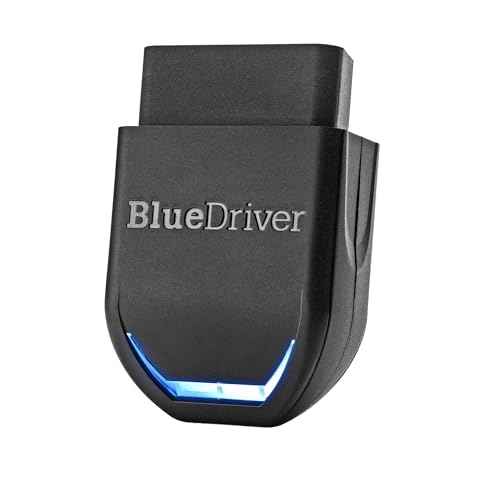
BlueDriver is a small adapter that plugs into the OBD2 port and turns a phone into the scanner. For anyone who has just looked up a trouble code and wants to know what is behind it, it covers the right things: it reads and clears codes, shows freeze frame data and live data while you drive, checks smog readiness, and shows Mode 6 test results, the raw self-test numbers that often show a fault building before it sets a code.
It also goes beyond the engine. BlueDriver lists enhanced diagnostics for check engine, ABS, SRS (airbag), TPMS and transmission on supported vehicles, which matters because a basic code reader cannot see an ABS or airbag fault at all. Its repair reports are matched to your VIN and give definitions, likely causes and fixes that the company says are verified by technicians.
The biggest selling point is the business model. BlueDriver says it is a one-time purchase with no subscription, no add-ons and no account required, and app updates are free. That is increasingly unusual in this category. The listing states compatibility with gas vehicles from 1996 on sold in North America, plus select light-duty diesel trucks such as the F-250 and RAM 2500, so check the compatibility chart for anything else.
Best for: Most drivers who want proper diagnostics, including ABS and airbag codes, without a subscription.
Pros:
- Live data, freeze frame, readiness and Mode 6
- ABS, SRS, TPMS and transmission on supported vehicles
- One-time purchase, no subscription
Cons:
- Needs a phone or tablet
- No bidirectional tests or service resets
- Diesel coverage limited to select trucks
2. Autel AL319 OBD2 Code Reader
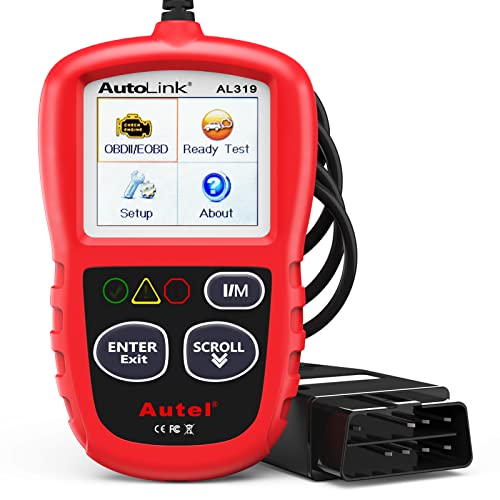
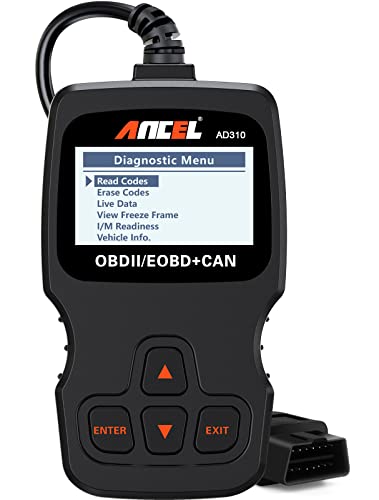
The Autel AL319 is the simplest way to find out why the check engine light is on. It plugs in with a cable, needs no batteries or phone, and powers up from the car. It reads and clears codes, looks up their definitions, and displays live data, freeze frame data and I/M readiness, the monitor status that tells you whether the car is ready for an emissions test.
A one-click readiness button and a color screen make it easy to use, and Autel offers free updates. It is a generic OBD2 reader, so it covers engine and emissions codes only: it will not read ABS, airbag or body codes, and it cannot run tests or resets. For a P-code from the engine, though, it gives you the code, its freeze frame and the live data to check, which is most of what a diagnosis needs.
Best for: Keeping in the glovebox to read and clear check engine codes on any 1996 or newer car.
Pros:
- Inexpensive and plug-and-play
- Live data, freeze frame and readiness
- No phone, batteries or subscription
Cons:
- Engine and emissions codes only
- No ABS, airbag or bidirectional functions
3. Innova 5310 OBD2 Scanner
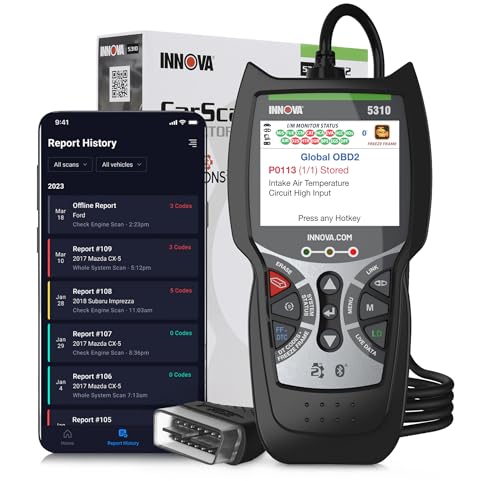
Innova’s 5310 is a handheld that moves beyond engine codes. Innova lists ABS and SRS diagnostics, live data, battery and alternator tests, an oil reset, hybrid diagnostics, trip cycle procedures and a total module scan, and it can show whether the car is likely to pass an emissions test.
It pairs with Innova’s RepairSolutions2 app for verified fixes, maintenance schedules and parts lookups, but the scanner works on its own too. The battery and alternator tests are a useful extra, because a weak battery or charging fault can set a confusing spread of codes on its own. Innova recommends checking its coverage tool before buying, since not every function works on every vehicle.
Best for: Home mechanics who want ABS and airbag codes and a charging-system check in a standalone handheld.
Pros:
- ABS and SRS codes, plus live data
- Battery and alternator tests
- Works with or without the app
Cons:
- Functions vary by vehicle
- No bidirectional tests
4. FOXWELL NT604 Elite OBD2 Scanner
The FOXWELL NT604 Elite reads and clears codes and shows live data from four systems: engine, transmission, ABS and SRS, on supported vehicles. That covers the warning lights most drivers actually see. AutoVIN identifies the vehicle automatically on most cars, FOXWELL lists support for more than 60 brands with no extra software fees, and it ships in a hard protective case.
FOXWELL is unusually clear about its limits, which is a good sign. The listing says the NT604 Elite does not support bidirectional active tests, ABS bleeding, oil resets, battery registration or other service functions. It also makes the point every scanner buyer should hear: clearing a code does not fix anything, and a warning light will come back until the underlying fault is repaired.
Best for: Drivers who want engine, transmission, ABS and airbag codes in one standalone tool, without paying for service functions they will not use.
Pros:
- Four systems including transmission
- AutoVIN and hard case
- No extra software fees
Cons:
- No service resets
- No bidirectional tests
5. OBDLink MX+ Bluetooth Adapter

OBDLink MX+ is an adapter rather than a complete scanner. It connects an iPhone, Android device or Windows PC to the car, and the software you run decides what it can do. That is its strength. OBDLink lists it as the recommended adapter for FORScan, Torque, BimmerCode, Dashcommand, AlfaOBD, Carista and others, so it suits owners who already know which app they want for their make.
OBDLink lists enhanced OEM support for Ford, GM, Mazda, Nissan and Infiniti, Toyota and Lexus, Honda, Hyundai and Kia, with access to ABS, SRS and TPMS data beyond generic engine codes. It also has over-voltage and battery drain protection built in. Some third-party apps charge for their advanced features, so budget for the app as well as the adapter.
Best for: Enthusiasts who use FORScan or another make-specific app, or want to log data on a laptop.
Pros:
- Works with the widest range of apps
- Enhanced OEM support for major brands
- Battery drain protection
Cons:
- Not a standalone tool
- Capability depends on the app you pair it with
6. TOPDON TopScan Lite Bidirectional Scanner

Bidirectional control means the scanner can command parts to work, not just read what they report: switch on the cooling fan, pulse an injector, cycle the A/C clutch, open a valve. That turns guesswork into a test. The TopScan Lite is one of the cheapest ways to get it, along with full-system scanning, eight service resets including oil, battery, throttle and electronic parking brake, and access to bulletin and repair information in the app.
Read the subscription terms before buying. TOPDON states that full-system scanning, code reading, performance tests and repair information remain available, but bidirectional control, service functions, live data, code clearing and the AI features are included for the first year only, then need a monthly, quarterly or annual subscription. After year one, it is a code reader unless you pay. Bought with that understood, it is still an inexpensive way to get a year of tools that used to cost several hundred dollars.
Best for: DIYers who want to try bidirectional tests and service resets for a specific job this year.
Pros:
- Bidirectional tests at a low entry price
- Full-system scan and eight resets
- Repair and bulletin information in the app
Cons:
- Live data, code clearing and active tests need a subscription after year one
- Needs a phone
7. Autel MaxiCOM MK808S Scan Tool

The MK808S is where a DIY scanner turns into a workshop tool. It is a 7-inch tablet with a wired connection that runs full-system diagnostics across engine, transmission, ABS, body and electrical modules, graphs several live data streams at once, and runs what Autel describes as more than 3,000 active tests on actuators such as fans, lights, pumps, doors and windows.
Its service menu covers more than 28 functions, including oil reset, battery registration, steering angle calibration, injector coding, clutch learning and cylinder balance tests, and Autel says it can access the security gateways that newer FCA, Renault and VAG vehicles use to lock out aftermarket tools. Updates are not free forever: the listing quotes an annual renewal fee of $124 to keep the software current.
Best for: Serious DIYers and small shops that work on many makes and need active tests and service functions.
Pros:
- Full-system diagnostics with active tests
- 28+ service functions
- Large screen and stable wired connection
Cons:
- Expensive for occasional use
- Annual fee for continued updates
Things To Keep In Mind Before You Buy
Every car and light truck sold in the US from the 1996 model year has OBD-II. EPA’s consumer guide to the system says all 1996 and newer cars and trucks use second-generation on-board diagnostics to manage and monitor the engine, transmission and emissions control components, and that a technician reads it by connecting a scanning device through a connector usually under the dashboard. Any scanner here will work with that port. What separates them is what they can read once connected.
Generic Codes vs ABS, Airbag and Body Codes
A basic OBD2 reader reads the emissions-related engine and transmission codes every manufacturer must make available: the P-codes, such as P0300 or P0420. It cannot see the ABS module, the airbag (SRS) module or body electronics, which set C, B and U codes. If your ABS or airbag light is on, a generic reader will often report no codes at all. For those lights you need an enhanced scanner that lists ABS and SRS for your make, such as the BlueDriver, Innova 5310 or FOXWELL NT604 Elite. Our guide to an ABS light that stays on explains why that light needs its own diagnosis.
Live Data and Freeze Frame Matter More Than Code Definitions
A code tells you what the computer decided; freeze frame and live data tell you why. Freeze frame records engine speed, load, coolant temperature and fuel trims at the moment the code set. Live data lets you watch sensors in real time, for example fuel trims climbing at idle on a lean code or an oxygen sensor that has stopped switching. Every code guide on this site, such as our P0300 misfire guide, relies on that data, so treat it as the minimum feature, not an extra.
Mode 6 and Readiness Monitors
Readiness monitors show whether the car has finished its self-tests since the codes were last cleared, which decides whether it can pass an emissions inspection. Mode 6 shows the raw results of those self-tests, including ones that are close to failing but have not yet set a code. Few cheap readers show Mode 6. BlueDriver does, and it is useful for intermittent faults such as small EVAP leaks.
Bidirectional Control and Service Functions
Bidirectional tools can command components to operate, which lets you test a cooling fan, a fuel pump or an EVAP vent valve without unplugging anything. Service functions cover jobs that need a computer after the repair: resetting the oil life, registering a new battery, retracting an electronic parking brake for a pad change, or calibrating the steering angle sensor. If you only want to read codes, you do not need either. If you do your own brakes on a newer car, you probably need a parking brake retract function.
Handheld, Bluetooth or Tablet
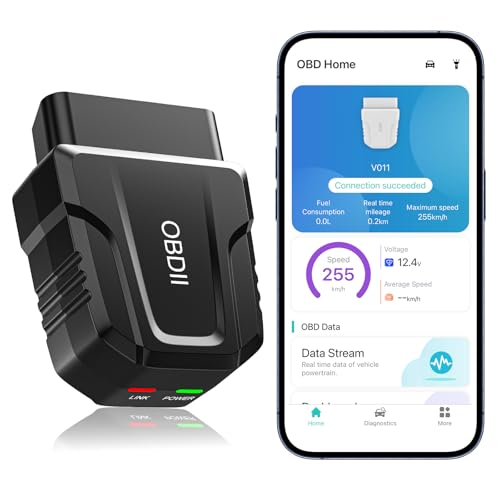
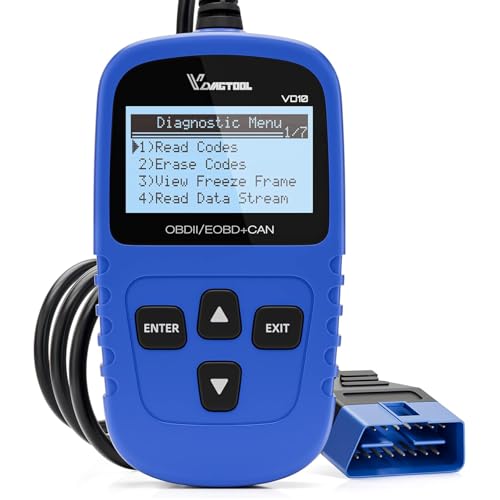
Handheld corded scanners need no phone, work every time and live happily in a glovebox. Bluetooth adapters are smaller, cheaper for what they offer, and use the phone’s screen, but depend on an app staying supported. Tablets are the most capable and the most expensive, and suit people who work on several cars.
Subscriptions and Update Fees
Check what happens after year one before you buy. Some tools are a one-time purchase with free updates (BlueDriver, Autel AL319, FOXWELL). Some keep working but charge for new coverage (Autel MK808S). Some remove core functions without a subscription (TOPDON TopScan Lite). None of these is wrong, but the cheapest tool on day one is not always the cheapest over three years.
A Scanner Does Not Fix Anything
Clearing a code turns the light off; it does not repair the fault, and the light will come back once the computer re-runs the test. Clearing codes also resets the readiness monitors, so a car taken for an emissions test straight after clearing will fail as not ready. And if the check engine light is flashing, EPA’s guide says a severe problem such as a catalyst-damaging misfire is occurring and should be addressed as soon as possible; see our guide to a flashing check engine light.
Winners And Losers
Winners: The BlueDriver Bluetooth Pro is the best all-round choice for most drivers because it covers the data that matters, live data, freeze frame, readiness and Mode 6, adds ABS and airbag codes on supported vehicles, and has no subscription. The Autel AL319 wins on value for anyone who mainly needs to read engine codes. The Autel MaxiCOM MK808S is the clear pick for anyone who wants active tests and service functions across many makes.
Losers: No scanner here is a bad buy, but two need care. The TOPDON TopScan Lite is excellent value for its first year and much less so afterwards, because live data and code clearing move behind a subscription. And the OBDLink MX+ is only as good as the app you pair it with, which makes it a poor choice for someone who wants a single tool that just works.
To Sum Up
If you want one scanner and do not want to think about it again, buy the BlueDriver Bluetooth Pro. If you only need to read the code behind a check engine light, the Autel AL319 does that cheaply and reliably. If the warning light is ABS or airbag rather than check engine, choose a scanner that lists those systems, such as the Innova 5310 or FOXWELL NT604 Elite. If you do your own brakes, batteries and maintenance on newer cars, look at bidirectional tools and service functions, and read the subscription terms first. Whatever you buy, use the live data, not just the code; that is where the diagnosis is.
Frequently Asked Questions
What is the best OBD2 scanner for most car owners?
For most drivers the BlueDriver Bluetooth Pro is the best all-round choice. It reads and clears codes, shows live data, freeze frame, readiness monitors and Mode 6, adds ABS, airbag, TPMS and transmission codes on supported vehicles, and is a one-time purchase with no subscription. If you only need to read engine codes, a basic reader such as the Autel AL319 costs much less.
Will an OBD2 scanner work on my car?
Every car and light truck sold in the US from the 1996 model year has an OBD-II port, and any OBD2 scanner can read its generic engine and emissions codes. ABS, airbag, body and service functions vary by make, model and year, so check the manufacturer’s compatibility list before buying a scanner for those features. Diesel and heavy-duty coverage is more limited.
Can a cheap OBD2 scanner read ABS and airbag codes?
Usually not. A basic OBD2 code reader reads the emissions-related engine and transmission codes that every manufacturer must make available. ABS and airbag faults are stored in separate modules that need an enhanced scanner. If your ABS or airbag light is on and a basic reader shows no codes, that is why.
Does clearing the code fix the check engine light?
No. Clearing the code turns the light off, but the fault is still there and the light will return once the computer re-runs its test. Clearing also resets the readiness monitors, so the car will not pass an emissions inspection until it has been driven enough to complete them. Use the scanner to diagnose and repair the fault, then clear the code.
What is a bidirectional scan tool and do I need one?
A bidirectional scan tool can send commands to the car, for example to switch on a cooling fan, pulse an injector or open an EVAP valve, so you can test a part without removing it. Most drivers who just want to read codes do not need one. It becomes useful for deeper diagnosis and for service jobs such as retracting an electronic parking brake or registering a new battery.
Are Bluetooth OBD2 scanners as good as handheld ones?
They can be better, because a phone screen shows more data than a small handheld display and the app can include repair information. The trade-off is dependence on an app, and some apps charge subscriptions for features such as live data or code clearing. A corded handheld needs no phone and no account, and works the same way every time.
