


As an Amazon Associate I earn from qualifying purchases.


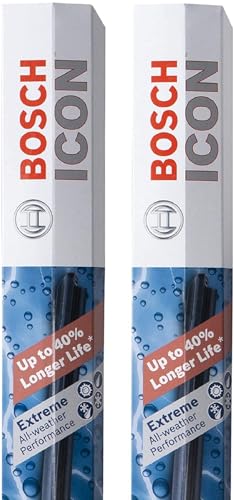


Worn wiper blades rarely fail all at once. They streak a little, then chatter, then leave a smeared arc right in your line of sight on the first dark, rainy commute of the season. A fresh pair is one of the cheapest safety upgrades on any car, but the choice is wider than it looks: beam, conventional, hybrid, silicone and dedicated winter blades all wipe differently, and they do not all fit the same wiper arms.
For most drivers, the Bosch ICON is the best all-round wiper blade. The Rain-X Repellency blade is the best value if you drive in heavy rain, and the TRICO Ice is the one to fit for snow and freezing temperatures. Below are seven blades worth buying, what each one does best, and how to get the right size and connector the first time.
Here is how the seven compare at a glance:
| Wiper Blade | Type | Best For |
|---|---|---|
| Bosch ICON | Premium beam | Best overall |
| Rain-X Repellency | Beam with rain repellent | Heavy rain on a budget |
| PIAA Si-Tech | Silicone | Longest life |
| Valeo 900 Ultimate | Frameless beam | OE-style replacement |
| TRICO Ice | Winter | Snow and ice |
| Rain-X WeatherBeater | Conventional frame | Older cars, value pair |
| Bosch Clear Advantage | Beam | Cheapest good beam blade |
1. Bosch ICON Premium Beam Wiper Blade

The ICON is Bosch’s flagship beam blade, and it earns the top spot by doing the basic job, even contact across the whole glass, better than almost anything else. Bosch’s DynamicFit tension spring arcs the blade to the curve of the windshield, and an asymmetrical spoiler uses airflow to press it down at highway speed, where cheaper blades start to lift and skip.
The rubber is Bosch’s ClearMax 365 compound: a soft wiping core inside a powder-coated shell that protects the edge from grit and weather. Bosch rates it for up to 40% longer life than other premium blades, which goes some way to offsetting a price that is roughly double a budget blade.
One fitment detail matters. The 22OE version shown here comes with adapters for side-lock, pinch-tab and top-lock arms, but it does not fit hook-style arms. If your car has the common J-hook arm, you need the ICON part numbers ending in “A” or “B” instead.
Best for: Drivers who do a lot of highway miles and want the most consistent wipe, and are willing to pay for it.
Pros:
- Stays in firm contact with the glass at highway speed
- Protected rubber edge with a long rated life
- Quiet, streak-free wipe
Cons:
- Among the most expensive blades here, and sold singly
- This OE version does not fit hook-style arms; check the part number suffix
2. Rain-X Repellency Water Repellent Wiper Blade

This blade does two jobs. It is a beam blade that wipes the glass, and its squeegee lays down Rain-X water repellent as it goes, so rain beads up and runs off instead of sheeting across the windshield. If you already like the effect of a Rain-X glass treatment, this keeps it topped up without a separate application.
Rain-X says its universal adapter fits 96% of vehicles, and the beam design gives even pressure along the length of the blade. The repellent effect is most noticeable at speed, when the beaded water is blown off the glass between wipes.
The one thing to get right on installation: the blade ships with a yellow cover on the squeegee, and it has to come off after fitting. Leave it on and the blade will not clear the glass properly, which accounts for a lot of “new blades don’t work” complaints.
Best for: Drivers in wet climates who want the rain-repellent effect built into the blade at a mid-range price.
Pros:
- Wipes and applies water repellent in one step
- Wide fitment with a universal adapter
- Good value for a beam blade
Cons:
- Yellow squeegee cover must be removed after installation
- Repellent effect is less obvious at low speeds
3. PIAA Si-Tech Silicone Wiper Blade

Most wiper blades use natural or synthetic rubber. PIAA’s Si-Tech uses silicone, which holds up better to UV, heat and ozone, the things that make ordinary rubber harden and crack in a sunny climate. That durability is the reason to buy it.
The silicone also leaves a thin water-repellent layer on the glass as it wipes, a similar effect to the Rain-X blade but built into the material instead of added as a treatment. PIAA designed the blade with no exposed metal, which helps stop ice and snow packing into it, and says it fits more than 98% of wiper arms.
The repellent layer builds up over the first several uses, so the wipe tends to get better after the first week rather than being at its best out of the box. It is also the most expensive blade on this list, per blade.
Best for: Hot or sunny climates where ordinary rubber blades crack within a season, and drivers who would rather replace blades less often.
Pros:
- Silicone resists UV and heat damage better than rubber
- Built-in water-repellent effect
- No exposed metal to collect ice
Cons:
- Highest price per blade here
- Repellent layer takes a few uses to build up
4. Valeo 900 Series Frameless Ultimate Wiper Blade

Valeo supplies original-equipment wiper systems to carmakers, and the 900 Series Frameless Ultimate is its aftermarket replacement for the frameless blades many newer cars leave the factory with. It is an all-season frameless design, so there is no exposed frame to catch ice or wind.
It is the choice for anyone who wants a replacement that looks and behaves like the blade that came off the car, without paying ICON prices. Amazon lists it as a vehicle-specific fit, so use the fit checker on the product page before ordering.
Best for: Owners of newer cars with frameless factory blades who want an OE-style replacement at a fair price.
Pros:
- OE-style frameless design from an original-equipment supplier
- Priced well below the premium beam blades
Cons:
- Vehicle-specific fitment; confirm with the fit checker
- Some sizes run in short supply
5. TRICO Ice Winter Wiper Blade

Ordinary blades struggle in real winter weather: ice builds up in the frame, the rubber stiffens and tears, and the blade stops touching the glass. The TRICO Ice is built specifically for that. A protective armor seals the blade structure from ice and snow, and the heavy-gauge wiper element is designed to resist tearing at sub-zero temperatures.
The one-piece flexible design conforms to most windshields, and TRICO’s one-click connection makes it quick to swap in when the weather turns. Many drivers fit winter blades in late autumn and switch back to all-season blades in spring, since a dedicated winter blade is heavier than it needs to be in summer rain.
The listing shown is the 24-inch size; TRICO sells the Ice in the other common lengths too.
Best for: Anyone who regularly drives through snow, sleet and freezing rain.
Pros:
- Sealed design keeps ice out of the blade structure
- Rubber built to resist tearing in extreme cold
- Quick one-click installation
Cons:
- A seasonal blade; overkill for mild winters
- Heavier than an all-season beam blade
6. Rain-X WeatherBeater Conventional Wiper Blades (Pack of 2)

Not every car suits a beam blade. Older vehicles with flatter windshields, and many trucks, were designed around conventional frame-style blades, and the WeatherBeater is a solid, inexpensive example. A galvanized steel frame spreads pressure through multiple points along the blade, and the natural rubber squeegee is formulated to resist cracking and splitting from heat, cold, washer fluid and road salt.
Rain-X says it meets or exceeds original-equipment standards, and it comes with a pre-installed multi-adapter. The pack of two makes it the cheapest way on this list to replace both front blades at once.
The trade-off is winter performance. An exposed frame collects snow and ice in a way that a beam blade does not, so in a harsh climate it is worth pairing these with a winter blade for the coldest months.
Best for: Older cars and trucks designed for conventional blades, and drivers who want to replace both front blades cheaply.
Pros:
- Priced as a pair
- Durable galvanized steel frame
- Pre-installed multi-adapter
Cons:
- Exposed frame can clog with ice and snow
- Conforms less closely to curved windshields than a beam blade
7. Bosch Clear Advantage Beam Wiper Blade

The Clear Advantage is Bosch’s budget beam blade, and it is the cheapest route into beam-blade performance on this list. The beam design keeps exposed metal to a minimum, which reduces ice and snow build-up, and a graphite-treated wiping edge cuts friction for a quieter, smoother wipe.
It has an asymmetric spoiler and a precision-tensioned steel spring like its more expensive sibling. It also has one practical advantage over the ICON shown above: the pre-mounted multi-adapter covers hook arms as well as pin, side-lock, pinch-tab and top-lock arms, so it fits a wide range of cars without hunting for a part-number suffix.
Best for: Budget-conscious drivers who want a beam blade that fits almost any car.
Pros:
- Lowest price here for a beam blade
- Adapter covers hook arms and most other arm types
- Quiet graphite-treated edge
Cons:
- Lacks the ICON’s protected rubber and longer rated life
- Sold singly
Things To Keep In Mind Before You Buy
Get the Size Right for Each Side
The driver and passenger blades are usually different lengths, and many SUVs and hatchbacks also take a separate rear blade. The owner’s manual lists the sizes, and the fit checker on each Amazon product page will confirm them for your exact model. Measuring the old blade works too, but round to the nearest listed size rather than guessing.
Check Your Wiper Arm Connector
The most common arm on older and mainstream cars is the J-hook. Many newer cars use side-lock, pin, pinch-tab or top-lock arms instead. Most blades ship with adapters, but not every blade fits every arm; the Bosch ICON 22OE above, for example, skips hook arms entirely. A quick look at how your current blade attaches saves a return.
Beam, Conventional, Hybrid or Winter?
- Beam blades use a curved spring steel band instead of a frame. They press evenly along their whole length and resist ice build-up, which is why most new cars use them.
- Conventional blades use a metal frame with several pressure points. They are inexpensive and suit flatter windshields but can clog with ice.
- Hybrid blades put a beam-style cover over a frame, aiming for the best of both.
- Winter blades seal the structure against ice and use cold-resistant rubber. They are best fitted seasonally.
Know When to Replace Them
Streaking, chattering, skipping, squeaking and visible splits in the rubber all mean a blade is done. Most blade makers recommend replacing blades every six to twelve months, and sooner in hot climates, where sun hardens the rubber. If the new blades still struggle, the cause may be elsewhere: our guide to why windshield wipers stop working covers the motor, linkage and fuse faults that no blade will fix.
Winners And Losers
The Bosch ICON is the winner for most drivers. It keeps the most consistent contact at speed, and Bosch rates it for a longer life than other premium blades, provided you buy the right part number for your arm type.
For value, the Rain-X Repellency blade is hard to beat. It costs only a few dollars more than a basic beam blade and adds a rain-repellent effect that helps in heavy rain. The Bosch Clear Advantage is the pick if you just want a good beam blade at the lowest price, and its adapter fits hook arms.
Climate decides the rest. The PIAA Si-Tech is worth its premium where sun and heat destroy ordinary rubber, and the TRICO Ice is the one to fit before the first snow. The Rain-X WeatherBeater is a solid budget pair for older cars built around conventional blades, but it is the weakest of the seven in ice.
To Sum Up
Buy the blade that suits your car’s arm type and your weather, not just the most expensive one. Check both front sizes before ordering, remove any protective cover after fitting, and replace blades at the first sign of streaking rather than waiting for them to fail in a storm.
Blades are only half of clear visibility. Pair them with a good windshield washer fluid, or an all-season washer fluid with anti-freeze for winter, and consider a rain repellent treatment if you choose a blade without one built in. If you are set on one brand, our Rain-X wiper blade lineup compares the whole range.
Frequently Asked Questions
How often should you replace windshield wiper blades?
Most blade makers recommend replacing them every six to twelve months. Replace them sooner if you see streaking, chattering, skipping or split rubber, and expect a shorter life in hot, sunny climates, where UV hardens the rubber.
Are beam wiper blades better than conventional blades?
For most modern cars, yes. A beam blade presses evenly along its whole length and has no exposed frame to collect ice, so it usually wipes more cleanly at speed and in winter. Conventional frame blades are cheaper and still suit older cars with flatter windshields.
What size wiper blades do I need?
Check the owner’s manual or the fit checker on the product page. The driver and passenger blades are usually different lengths, and some vehicles also need a rear blade. You also need to know your wiper arm type (J-hook, side-lock, pin, pinch-tab or top-lock), because not every blade fits every arm.
Are silicone wiper blades worth the extra cost?
In hot or sunny climates they often are. Silicone resists UV and heat better than rubber, so it lasts longer, and blades like the PIAA Si-Tech leave a water-repellent layer on the glass. In mild climates a good rubber beam blade is usually enough.
Do I need winter wiper blades?
If you regularly drive in snow, sleet or freezing rain, a dedicated winter blade such as the TRICO Ice clears the glass far better than a standard blade, because its sealed design keeps ice out and its rubber resists tearing in the cold. Many drivers fit them in late autumn and switch back in spring.
Why do my new wiper blades streak or chatter?
The most common causes are a protective cover left on the squeegee after installation, wax or road film on the glass, or a blade that does not suit the arm. Clean the windshield thoroughly, check that the blade is seated correctly, and if the problem continues, the wiper arm tension or linkage may be at fault.
