


As an Amazon Associate I earn from qualifying purchases.

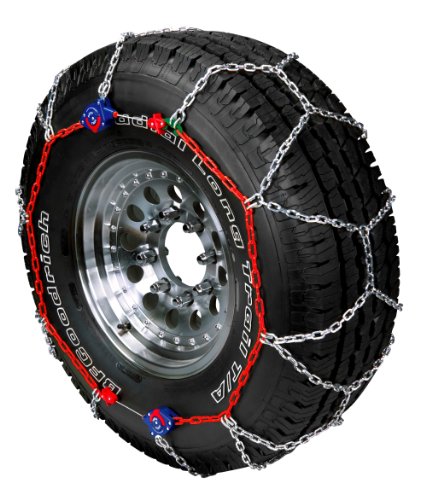


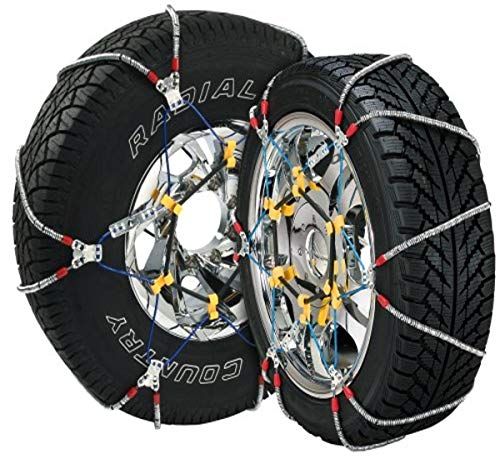
Snow chains are the piece of winter gear most drivers buy in a hurry, usually at a gas station at the foot of a mountain pass, at whatever price is on the shelf and in whatever size is left. Buying ahead means getting the right size, a type that actually fits between your tire and the wheel well, and time to practise fitting them in a dry driveway instead of on a dark, icy shoulder.
For most cars, the SCC Super Z6 is the best snow chain: a low-profile cable chain built for vehicles with very little clearance around the tires, which is most modern cars. The Peerless Auto-Trac is the easiest to fit because it tightens itself as you drive, and the Thule XG-12 Pro is the premium pick for SUVs that see real mountain roads every winter. Here are the seven worth buying, plus a textile alternative for drivers who only need something for occasional chain controls.
One thing applies to every product here: snow chains are sold by tire size. Each listing below is one size in a range, so read the size off your tire sidewall (for example, 225/65R17) and use the size chart on the listing to pick the matching model number before you buy.
Here is how they compare at a glance:
| Product | Type | Best For |
|---|---|---|
| SCC Super Z6 | Low-profile cable | Best overall for cars |
| Peerless Auto-Trac | Self-tightening chain | Easiest to fit |
| SCC Radial Chain Cable | Cable | Budget pick |
| Thule XG-12 Pro | Premium link chain | SUVs and frequent mountain driving |
| Thule CG-9 | 9 mm self-tensioning chain | Cars with alloy wheels |
| SCC Quik Grip Light Truck | Wide-base link chain | Pickups and light trucks |
| AutoSock | Textile snow sock | Occasional use and chain alternative |
1. SCC Super Z6 Cable Tire Chain
Most modern cars leave very little room between the tire and the suspension, brake lines and inner fender, and that gap is what rules out traditional heavy link chains. Security Chain Company designed the Super Z6 for exactly that: cars, pickups and SUVs with very limited clearance around the drive tires.
Two details make it the easiest cable chain to live with. It installs without moving the vehicle, so there is no need to drive forward half a turn to finish the job, and it has a built-in rubber tightener, which SCC says means no stopping to retighten after the first stretch of road. Its zig-zag cable pattern gives a smoother ride than a ladder-style chain.
The trade-off is the usual one for cable chains: they are lighter and lower-profile than link chains, so they wear faster on bare pavement and give less bite in deep snow. For a car that needs to get through chain controls a few times a winter, that is the right compromise.
Best for: Sedans, hatchbacks and crossovers with tight wheel wells, which is most of them.
Pros:
- Built for vehicles with very limited tire clearance
- Installs without moving the vehicle
- Built-in rubber tightener, so no retightening stop
Cons:
- Cable wears faster than link chain on bare pavement
- Less grip than a link chain in deep snow
2. Peerless Auto-Trac Tire Traction Chain
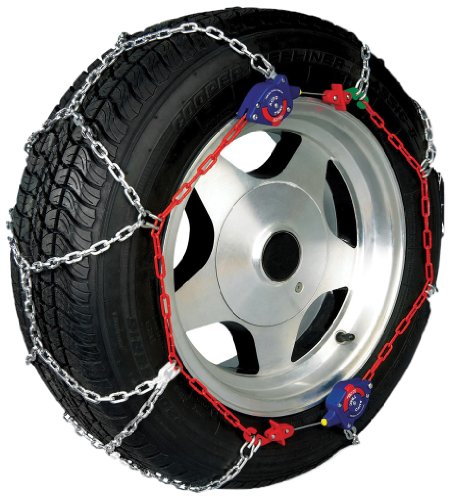
The hardest part of fitting conventional chains is getting them tight enough, then stopping after a short distance to tighten them again once they have settled. The Auto-Trac does away with that. Its ratchet tighteners take up the slack automatically and keep the chain centred on the tread as you drive, so the fitting job is mostly draping it over the tire and hooking it up.
It uses a diamond cross-chain pattern, which SCC says gives a smoother ride and better traction than a simple ladder pattern. The light truck and SUV versions are listed as meeting Class S clearance requirements even in light truck sizes, which is unusual for a link chain and makes the range a good fit for crossovers and smaller SUVs as well as cars.
The listing is clear on two limits: do not exceed 30 mph with the chains on, and do a test fit at home, because tires of the same nominal size vary between manufacturers.
Best for: Drivers who want the simplest fitting job, particularly anyone who has never fitted chains before.
Pros:
- Self-tightening ratchets, so no retightening stop
- Diamond pattern for a smoother ride
- Available in car and light truck/SUV sizes
Cons:
- Costs more than a basic cable chain
- 30 mph maximum, like most chains
3. SCC Radial Chain Cable Traction Chain

The Radial Chain Cable is the cheapest way to meet a chain requirement with a real, branded product. It is a lightweight cable chain that needs little operating space around the drive tires, so it suits most cars, and its low weight makes it easy to carry in the trunk and quick to fit and remove.
Instead of the steel rollers used on many cable chains, which can flatten with use, it uses traction coils wound around the cable. One instruction on the listing is worth taking seriously: chain tighteners should not be used with this model, so do not add rubber tensioners to it the way you might with a link chain.
Unlike the Super Z6, it has no built-in tightener, so plan on a quick stop to check tension after the first short drive.
Best for: Drivers who need chains to satisfy a chain control a couple of times a year and want to spend as little as possible.
Pros:
- Lowest price here
- Light and compact to store
- Low clearance requirement
Cons:
- No self-tightening feature
- Not designed for heavy, frequent use
4. Thule XG-12 Pro Snow Chains
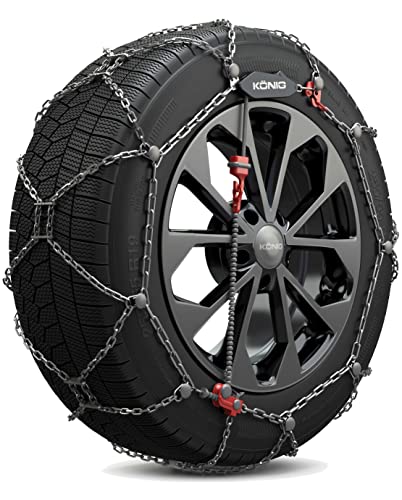
The XG-12 Pro, sold under both the König and Thule names, is a different class of product from the cable chains above. It is a 12 mm link chain in hardened manganese nickel steel alloy, made for SUVs and light trucks that see steep, snowy mountain roads every winter rather than one or two chain controls a year.
Thule has clearly designed it around the fitting experience. The box includes gloves, a kneeling mat, spare parts and instructions, and nylon reinforcements protect the wheel rim from scratches. Thule backs it with a lifetime manufacturer warranty.
It is much more expensive than anything else here. For a ski-season commuter or anyone living above the snow line, the durability and grip justify it; for occasional use, a cable chain makes more sense.
Best for: SUVs and light trucks driven on mountain roads all winter.
Pros:
- Hardened alloy steel chain built for heavy use
- Nylon guards protect the wheels
- Lifetime manufacturer warranty, with gloves and a kneeling mat included
Cons:
- The most expensive chain here by a wide margin
- Heavier and bulkier to store than cable
5. Thule CG-9 Snow Chains
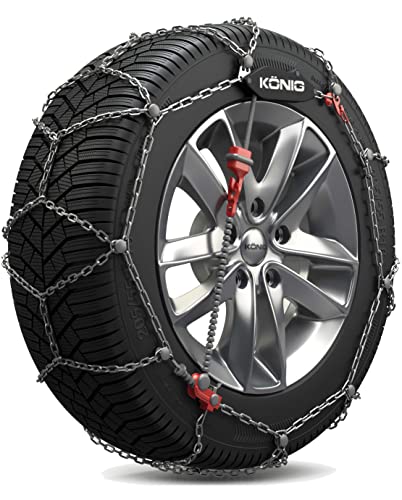
The CG-9 is Thule’s answer for passenger cars that need a proper link chain but have limited clearance. It is a self-tensioning 9 mm chain, so it takes up its own slack once fitted, and its 9 mm clearance on the inside of the tire and on the tread makes it workable on many cars that cannot take a heavier chain.
Optional nylon bumpers protect alloy wheels, which matters on cars with large, low-profile wheels where a chain sits close to the rim. Thule lists European certifications for it, including the Austrian Norm 5117 and Italian UNI 11313 snow chain standards, plus TÜV.
Sizes are specific: the model linked here, size 107, is listed for 235/50-18 tires. Check Thule’s size chart for yours.
Best for: Cars with alloy wheels whose owners want link-chain grip without a heavy chain.
Pros:
- Self-tensioning
- 9 mm clearance suits many passenger cars
- Optional bumpers protect alloy wheels
Cons:
- Costs more than cable chains
- Narrow size coverage per model
6. SCC Quik Grip Light Truck Tire Chain

Full-size pickups and heavier SUVs usually have the wheel-well clearance that cars lack, and they benefit from a heavier chain. The Quik Grip Wide Base is a traditional link chain from Security Chain Company for light truck and SUV applications, rated for highway service and both on- and off-road use.
This is the type of chain to carry if you tow, drive unplowed rural roads or work sites, or need something that will survive more than a few chain-control miles. It is a conventional cam-tightened design rather than a self-tightening one, so expect to stop and retighten after the first short drive.
Check your truck’s owner’s manual before buying any chain. Some light trucks are limited to Class S chains on certain tire sizes, and a heavy link chain is only an option if the manual allows it.
Best for: Pickups and full-size SUVs with enough wheel-well clearance for a heavier chain.
Pros:
- Heavy-duty link chain for light trucks and SUVs
- Rated for highway service and off-road use
- Wide-base links for grip in deep snow
Cons:
- Needs more clearance than cable chains
- Must be retightened after fitting
7. AutoSock Snow Socks (Chain Alternative)

AutoSock is not a chain at all. It is a textile cover that slips over the tire, and AutoSock says its webbing helps reduce snow buildup between the tire and the sock while self-centring as you drive. It is far quicker to fit than any chain, weighs almost nothing, has no metal to touch the wheel or brake parts, and rides smoothly.
It also counts as a legal alternative in some places. Colorado’s Department of Transportation lists AutoSock among the approved alternative traction devices under its Passenger Vehicle Traction and Chain Laws. Rules differ by state, so check before relying on it elsewhere. AutoSock says passenger vehicles should stay at or under 30 mph with them fitted.
The trade-off is durability. Fabric wears quickly on bare pavement, so take the socks off as soon as the road clears. They suit occasional use, not a winter of daily mountain driving.
Best for: Drivers who rarely need traction devices, cars with too little clearance for chains, and anyone who wants the fastest fitting job.
Pros:
- Fastest to fit, with no metal near the wheel
- Smooth, quiet ride
- Listed as an approved alternative traction device in Colorado
Cons:
- Wears quickly on bare pavement
- Not accepted as a chain substitute everywhere
Things To Keep In Mind Before You Buy
Read Your Owner’s Manual First
The manual is the only reliable answer to whether your car can take chains, which type, and on which tire sizes. Many cars are limited to low-profile Class S chains, the SAE clearance class that cable chains like the Super Z6 are built for, and some manuals say chains should not be used at all with certain wheel and tire packages. Fitting a chain the car was not designed for can damage brake lines, ABS sensor wiring and the inner fender.
Chains Go on the Drive Wheels
Chains sold in pairs go on one axle, and it has to be the one that drives the car. Caltrans’ winter driving guidance is blunt about it: chains must be installed on the drive wheels, so know whether your vehicle is front- or rear-wheel drive. On all-wheel drive vehicles, the manual specifies which axle; it is often the front.
Know the Rules Where You Drive
Chain controls are enforced by signs on the road, and they can change quickly with the weather. Caltrans says to always carry chains in the mountains and puts the speed limit at 25 or 30 mph when chains are required. Colorado’s traction law requires either adequate tires or chains or an approved alternative, and its chain law requires chains or an approved alternative on every vehicle. CDOT lists fines of $100 plus a $33 surcharge for non-compliance, rising to $500 plus a $157 surcharge if a stuck vehicle closes a lane.
Cable, Link Chain or Sock?
Cable chains are light, cheap and fit tight wheel wells, but wear faster. Link chains grip better in deep snow and last longer, but need more clearance and cost more. Snow socks are the fastest to fit and the gentlest on the car, but wear quickly on pavement and are not accepted everywhere. Match the type to how often you will use it, not just to the price.
Practise Once at Home
Fit the chains once in a dry driveway before you need them. It confirms the size is right, and the second time you do it, at the side of a snowy road, it takes a fraction as long. Keep gloves, a kneeling mat or a piece of cardboard, and a headlamp with the chains, along with the rest of a winter car emergency kit.
Winners And Losers
The SCC Super Z6 wins for most cars. It fits the tight wheel wells most modern vehicles have, installs without moving the car and needs no retightening. The Peerless Auto-Trac is the easiest link chain to fit, and the Thule XG-12 Pro is the one to buy for an SUV that sees mountain roads all winter.
The Thule CG-9 suits cars with alloy wheels that need more grip than a cable chain gives, and the SCC Quik Grip is the heavy-duty choice for pickups. The Radial Chain Cable is the cheapest way to satisfy a chain control.
AutoSock is the weakest performer on long stretches, because fabric wears on pavement, but it is the best fit for drivers who rarely need traction devices or whose cars have no room for chains.
To Sum Up
Check your owner’s manual, read your tire size, pick the type that suits how often you will use it, and practise fitting it before the first storm. Then keep the chains in the car all winter, because chain controls go up faster than you can get home to fetch them.
Chains are the last line of defence, not the first. Good winter tires do most of the work, and our comparison of winter tires vs all-season tires explains when they are worth it. If you do end up stuck, our guide on how to get a car unstuck from snow covers what to do next, and tire traction mats are a useful backup to carry alongside chains.
Frequently Asked Questions
How do I know what size snow chains to buy?
Read the tire size on the sidewall, for example 225/65R17, and match it to the manufacturer’s size chart. Each chain model fits a specific range of tire sizes, so the right part number depends on your exact tire, not just your vehicle.
Do snow chains go on the front or rear tires?
On the drive wheels. Front-wheel-drive cars take chains on the front, rear-wheel-drive vehicles on the rear. On all-wheel and four-wheel drive vehicles, the owner’s manual specifies which axle, and it is often the front.
How fast can you drive with snow chains on?
Most chains and snow socks on this list are rated for a maximum of 30 mph. Caltrans sets the speed limit at 25 or 30 mph when chains are required. Slow down further on packed ice, and remove chains once you reach bare pavement.
Are cable chains as good as link chains?
Not quite. Link chains bite harder in deep snow and last longer, but they need more clearance around the tire. Cable chains are lighter, cheaper and fit the tight wheel wells most modern cars have, which is why many owner’s manuals specify them.
Are snow socks legal instead of chains?
In some places. Colorado’s Department of Transportation lists AutoSock as an approved alternative traction device under its traction and chain laws. Rules vary by state and road, so check the local requirement before relying on socks in a chain control area.
Do I need chains if I have all-wheel drive?
Often, yes. All-wheel drive helps a car move but does nothing for braking or cornering on ice, and many chain controls still require AWD vehicles to carry chains even when they are exempt from fitting them. Caltrans advises drivers to always carry chains in mountain areas.
