


As an Amazon Associate I earn from qualifying purchases.





Gasoline starts going stale sooner than most people expect. Left sitting in a tank over winter, it oxidizes into gum and varnish, and ethanol-blended fuel pulls in moisture from the air. Come spring, the result is a mower that will not start, a boat that runs rough, or a classic car that sputters on its first drive of the year. A fuel stabilizer, added to fresh fuel before storage, prevents most of that for the price of a few dollars.
For most people, STA-BIL Storage is the best fuel stabilizer: cheap, easy to dose, and rated to keep gasoline fresh for up to two years. Star Tron Enzyme is the pick for ethanol fuel and boats, and STA-BIL Diesel is the one to use for stored diesel. Here are the seven worth buying, plus what to use if an engine is already struggling on old fuel.
Here is how they compare at a glance:
| Product | Fuel | Best For |
|---|---|---|
| STA-BIL Storage | Gasoline | Best overall |
| Star Tron Enzyme Fuel Treatment | Gasoline and diesel | Ethanol fuel and boats |
| Sea Foam Motor Treatment | Gasoline and diesel | Stabilizing and cleaning |
| Lucas Oil Fuel Stabilizer | Gasoline | Alcohol-free budget pick |
| STA-BIL Diesel Fuel Stabilizer | Diesel | Stored diesel |
| Gumout Multi-System Tune-Up | Gasoline and diesel | Lowest price |
| STA-BIL Fast Fix Small Engine | Gasoline | Reviving small engines |
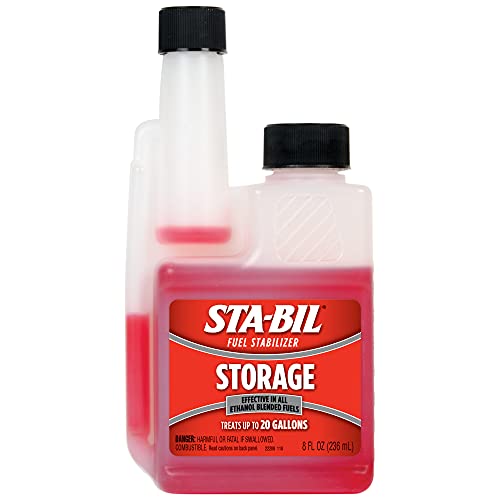
1. STA-BIL Storage Fuel Stabilizer
The red bottle is the default for a reason. STA-BIL Storage is made for exactly this job, and STA-BIL says it keeps gasoline fresh for up to 24 months, long enough to cover any normal winter lay-up with a wide margin. Its blend of antioxidants, corrosion inhibitors and detergents works in both ethanol and ethanol-free gasoline.
Dosing is simple: 1 ounce per 2.5 gallons of gas, poured into the tank before you add fuel. Then run the engine for about five minutes, so treated fuel reaches the lines, carburetor or injectors, not just the tank. That last step is the one people skip, and it is the one that protects a carburetor bowl.
One detail worth knowing: STA-BIL says an opened bottle is good for two years. Write the date on the bottle when you open it.
Best for: Cars, motorcycles, mowers, generators and anything else with a gasoline tank going into storage.
Pros:
- Rated to keep gasoline fresh for up to 24 months
- Clear dosing on the bottle
- Very low cost per treated gallon
Cons:
- A stabilizer only; it will not clean deposits that have already formed
- Opened bottles have a two-year shelf life
2. Star Tron Enzyme Fuel Treatment
Star Tron is built around ethanol problems, which makes it a favourite with boat owners and anyone whose equipment sits for long periods on E10. Star Brite says its enzyme formula stabilizes fuel for up to two years and can help rejuvenate old, sub-spec fuel.
It handles water differently from most stabilizers. Rather than trying to separate it, Star Tron disperses water through the fuel as tiny droplets that burn off as the engine runs, which Star Brite says helps prevent phase separation, where water-saturated ethanol drops out of the gasoline and settles at the bottom of the tank.
It is also economical: 1 ounce treats 16 gallons, so this 32-ounce bottle covers up to 512 gallons. Star Brite says it works in all engines and all fuels, including diesel.
Best for: Boats and any equipment running ethanol-blended fuel, especially in humid conditions.
Pros:
- Designed specifically for ethanol-related problems
- Treats 16 gallons per ounce
- Works in gasoline and diesel
Cons:
- Costs more upfront than STA-BIL Storage
- Claims about restoring old fuel only go so far; badly stale fuel should be drained
3. Sea Foam Motor Treatment

Sea Foam is the multi-tool of fuel additives. It is a petroleum-based treatment that can go in the fuel tank, the crankcase or, on some engines, through the intake, and Sea Foam says it stabilizes fuel for up to two years in the tank.
Its appeal for storage is that it also cleans. Added before a lay-up, it helps dissolve gum and varnish already in the system while stabilizing the fuel going into storage, so it suits older equipment that may already have some deposits.
The Amazon listing is thin on detail, so follow the dosing directions on the can.
Best for: Older engines and anyone who wants one product that stabilizes and cleans.
Pros:
- Stabilizes fuel and cleans deposits
- Petroleum-based; works in gasoline and diesel
- Can also be used as an oil or intake treatment
Cons:
- Higher dose rate than a dedicated stabilizer, so it costs more per gallon
- The Amazon listing gives little detail
4. Lucas Oil Fuel Stabilizer

Lucas makes a straightforward, low-cost stabilizer that prevents fuel breakdown in gasoline and ethanol blends. Lucas says it contains no alcohol and is safe for both fuel-injected and carbureted engines, which covers everything from a car to a string trimmer.
It is a simple product without cleaning or water-dispersing extras, which is why it is one of the cheapest bottles on this list. For an engine in good condition that just needs its fuel kept fresh over winter, that is all it needs.
Best for: Anyone who wants a basic alcohol-free stabilizer at a low price.
Pros:
- Alcohol-free formula
- Safe for carburetors and fuel injection
- Inexpensive
Cons:
- No cleaning or water-control extras
- Lucas does not state a storage duration on the listing
5. STA-BIL Diesel Fuel Stabilizer
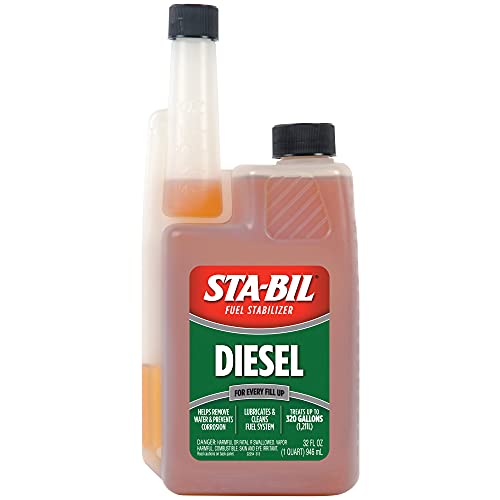
Diesel does not go stale in quite the same way as gasoline, but it still oxidizes in storage, forms sludge and sediment, and collects water that can corrode a tank and feed microbial growth. STA-BIL’s diesel formula targets exactly those problems: it reduces oxidation, prevents sludge and sediment, removes water and adds corrosion inhibitors.
It also lubricates and cleans the fuel system, and STA-BIL says it is compatible with ultra-low sulfur diesel and biodiesel blends, which matters because biodiesel is less stable in storage than petroleum diesel.
Use it for diesel trucks, tractors, generators and backup fuel tanks that will sit for months. If the diesel will also face freezing temperatures, pair it with an anti-gel additive.
Best for: Diesel vehicles, farm equipment, generators and stored diesel.
Pros:
- Formulated specifically for diesel storage
- Removes water and prevents sludge
- Compatible with ULSD and biodiesel blends
Cons:
- Not an anti-gel; winter storage may need both
- Diesel only
6. Gumout Multi-System Tune-Up

Gumout’s Multi-System Tune-Up is primarily a fuel system cleaner, built around a PEA detergent that cleans direct-injection injectors and carburetors, but Gumout also markets it as a fuel stabilizer, and it is the cheapest bottle here.
It works in gasoline, diesel and ethanol fuels and can go in the tank, the crankcase or through the induction system. For a vehicle that is still being driven occasionally over winter, it is an inexpensive way to keep the fuel system clean and the fuel from breaking down.
Best for: Budget buyers and vehicles that sit between occasional drives rather than in long-term storage.
Pros:
- Lowest price here
- Cleans injectors and carburetors as well as stabilizing
- Works in gasoline, diesel and ethanol fuels
Cons:
- Gumout does not state a storage duration; use STA-BIL Storage for long lay-ups
- A cleaner first, stabilizer second
7. STA-BIL Fast Fix Small Engine Treatment (for Engines Already Struggling)

This one is for the other side of storage: the mower or generator that was put away without stabilizer and now will not start, or starts and sputters. STA-BIL says Fast Fix breaks down the gum and varnish that cause rough running and hard starts, cleans carburetors without disassembly, removes water and counters the effects of ethanol blends up to E15.
Add it to fresh gas and run the engine so it works through the system; one 8-ounce bottle treats up to 20 gallons. It is designed for 2-cycle and 4-cycle small engines, from trimmers and chainsaws to snow blowers.
It cannot rescue fuel that has gone badly stale or turned to varnish. Drain that first, then use Fast Fix with fresh fuel, and add a proper stabilizer before the next lay-up.
Best for: Small engines that are already hard to start or running rough after sitting on untreated fuel.
Pros:
- Cleans carburetors without taking them apart
- Handles water and ethanol up to E15
- Made for small 2-cycle and 4-cycle engines
Cons:
- A fix, not a storage stabilizer
- Will not rescue fuel that has already gone badly stale
Things To Keep In Mind Before You Buy
Why Fuel Goes Bad in Storage
Gasoline is a blend of compounds, and the lighter, more volatile ones evaporate first, which makes old fuel harder to ignite. The rest slowly oxidizes into gum and varnish that coat carburetor jets and injectors. Ethanol blends add a second problem: ethanol absorbs water, and once it holds enough, the water-ethanol mix can separate from the gasoline and sink to the bottom of the tank, which is exactly where the fuel pickup sits.
Add It to Fresh Fuel, Then Run the Engine
A stabilizer preserves fuel; it does not restore fuel that has already gone off. Add it to a tank of fresh gasoline, then run the engine for a few minutes so the treated fuel reaches the fuel lines and carburetor or injectors. Most manufacturers also suggest storing with a nearly full tank, which leaves less air space for moisture to condense.
Match the Product to the Fuel
Most stabilizers are made for gasoline. Stored diesel has different problems, such as oxidation, sludge, water and microbial growth, and needs a diesel-specific product like STA-BIL Diesel. Boats and equipment running ethanol blends in damp conditions benefit most from a product that manages water, such as Star Tron.
Storing a Car? Fuel Is Only Half of It
A car laid up for winter usually fails to start because of a flat battery, not stale fuel. A battery maintainer keeps it charged through storage, and our guide to why a car will not start after sitting for months covers the rest of the list.
Winners And Losers
STA-BIL Storage wins for most people. It is cheap, clearly dosed and rated for up to two years, which covers any normal storage season. Star Tron is the better choice for boats and anything that sits on ethanol fuel in humid conditions, thanks to its water-dispersing formula.
Sea Foam earns its place for older equipment that could use a clean on the way into storage, and Lucas is a simple alcohol-free budget option. STA-BIL Diesel is the only product here designed for stored diesel.
Gumout Multi-System Tune-Up is the weakest pure stabilizer of the group, since it is really a cleaner, but it suits a car that is still driven occasionally. Fast Fix is the one to buy when you forgot the stabilizer last year and are paying for it now.
To Sum Up
Pick a stabilizer that matches your fuel and how long the engine will sit, add it to fresh fuel, and run the engine for a few minutes so it reaches the whole system. Two minutes and a few dollars in the autumn saves a carburetor clean in the spring.
If an engine has been running on old fuel for a while and has lost performance, a stabilizer will not clean it up. Our guide to the best fuel system cleaners covers products designed to remove deposits that have already formed.
Frequently Asked Questions
How long does gas last without a stabilizer?
It varies with the fuel, temperature and how well the container is sealed, but untreated gasoline can start to degrade within a few months, and ethanol blends are more prone to problems because they absorb moisture. If fuel will sit for more than a month or two, treat it with a stabilizer.
How long does fuel stabilizer keep gas fresh?
It depends on the product. STA-BIL Storage and Star Tron are both rated to keep fuel fresh for up to two years when added to fresh gasoline. Store the fuel in a sealed tank or container, out of direct heat.
Can fuel stabilizer fix old gas?
Not reliably. Stabilizers are designed to keep fresh fuel from breaking down, not to restore fuel that has already gone stale. Some products claim to help revive old fuel, but gasoline that smells sour or looks dark or cloudy should be drained and replaced.
Do I need to run the engine after adding stabilizer?
Yes. Run the engine for about five minutes after adding treated fuel, so the stabilizer reaches the fuel lines and carburetor or injectors. If only the tank is treated, untreated fuel left in a carburetor bowl can still varnish over winter.
Is fuel stabilizer safe for all engines?
The products on this list are made for common engines: cars, motorcycles, boats and small 2-cycle and 4-cycle equipment. Use a diesel-specific stabilizer for diesel fuel, and check the label for any engine-specific instructions.
Should I store a car with a full or empty tank?
Most stabilizer makers and storage guides recommend a nearly full tank of treated fuel. It leaves less air space for moisture to condense in the tank, which matters most with ethanol-blended gasoline.
