


As an Amazon Associate I earn from qualifying purchases.


The washer fluid in your car is rated for a temperature, and most drivers never check what it is. Summer bug-wash fluid, homemade mixes and fluid made from tablets or plain water can freeze solid in the reservoir and lines, leaving you with no way to clear road salt from the windshield on the very days you need it most. In a hard freeze, frozen fluid can also crack the reservoir or split a line.
For most cold-climate drivers, Prestone AS250 De-Icer is the best winter washer fluid: rated to -34°F, made to melt frost and resist refreezing on the glass. Rain-X 2-in-1 All Season is the pick if you want water beading as well, and Clean Revolution is the one to buy in California and other states with strict VOC rules. Here are the seven worth buying, including two additives that winterize fluid already in the tank.
Here is how they compare at a glance:
| Product | Rated To | Type | Best For |
|---|---|---|---|
| Prestone AS250 De-Icer | -34°F | Winter de-icer | Best overall |
| Rain-X Extreme Temp De-Icer | -30°F | Winter de-icer | Severe cold |
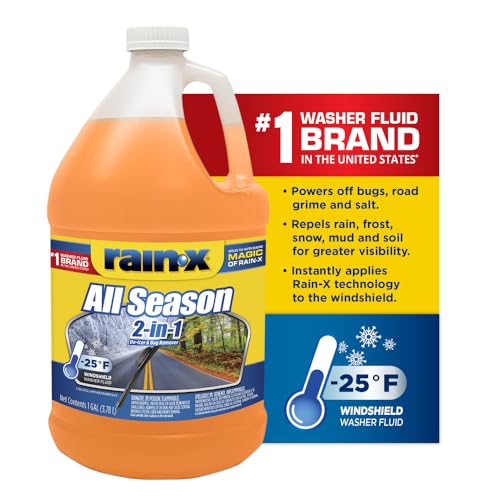
| Rain-X 2-in-1 All Season | -25°F | All-season with water beading | Year-round use |
| Clean Revolution All Season | -27°F | Low-VOC all-season | California and Texas |
| PEAK De-Icer | -20°F | Winter de-icer | Budget pick |
| Prestone AS240 Booster | Lowers freeze point 20°F+ | De-icer additive | Winterizing fluid already in the tank |
| Rain-X Washer Fluid Additive | Not a de-icer | Water-beading additive | Adding Rain-X to any fluid |
1. Prestone AS250 De-Icer Winter Washer Fluid
Prestone’s AS250 is a dedicated winter fluid, and its -34°F rating covers almost anywhere in the lower 48 states. It is not just antifreeze for the reservoir: Prestone formulates it to melt ice and frost on the glass and to resist refreezing on the windshield after spraying, which is the failure that turns a quick wash into a smeared, icy mess at highway speed.
It is also made for the dirt winter actually produces. Prestone says it cleans away road salt and grime, is streak and glare free, and is safe for windshields with rain-sensing technology. It is ready to use, so it pours straight into the reservoir with no mixing.
Buy it before the first freeze and run the reservoir low on summer fluid first, so the winter fluid is not diluted.
Best for: Drivers in cold climates who want the most freeze protection in a widely available fluid.
Pros:
- Rated to -34°F
- Formulated to melt frost and resist refreezing on the glass
- Safe for rain-sensing windshields
Cons:
- No bug-wash or water-beading extras
- Winter-only, so it is a seasonal swap
2. Rain-X Extreme Temperature De-Icer

Rain-X’s Extreme Temperature De-Icer is the brand’s dedicated cold-weather fluid, sold as rated to -30°F. It sits alongside Prestone AS250 as a straightforward winter de-icer from a brand most drivers already know.
The single-gallon Amazon listing gives almost no detail, so check the rating on the jug you receive; Rain-X also sells a -25°F Heavy Duty De-Icer, and the two are easy to confuse. If you specifically want Rain-X’s water-beading treatment, the 2-in-1 All Season fluid below is the one that includes it.
Best for: Drivers in very cold regions who prefer the Rain-X brand.
Pros:
- Rated to -30°F
- Dedicated winter formula
- Widely available brand
Cons:
- Very little detail on the listing
- Easy to confuse with Rain-X’s -25°F version
3. Rain-X 2-in-1 All Season Washer Fluid
If you would rather not swap fluids twice a year, an all-season fluid is the compromise, and Rain-X’s 2-in-1 is the best known. It is rated to -25°F, removes light snow, ice, grime and bugs, and applies Rain-X’s water-beading treatment every time you spray, which helps rain and sleet run off the glass between wipes.
-25°F is enough for most of the country, but drivers in the northern Plains, upper Midwest and New England should use a colder-rated winter fluid in deep winter. Note that the listing says it cannot be shipped to California, Texas or Arizona, where volatile organic compound (VOC) rules restrict some washer fluids.
Best for: Drivers in moderate winter climates who want one fluid all year, with water beading.
Pros:
- Year-round formula with bug and ice removal
- Rain-X water beading with every spray
- Low price
Cons:
- -25°F is not enough for the coldest regions
- Not shipped to California, Texas or Arizona
4. Clean Revolution Low-VOC All Season Washer Fluid
Several states limit the VOC content of washer fluid, which is why some popular fluids cannot be sold or shipped there. Clean Revolution is built around that problem: the maker says its formula cuts VOC levels by 40% compared with traditional washer fluids and meets the strictest clean-air standards, including California Type A and Texas.
It is still a real winter fluid. Clean Revolution rates it to -27°F and pairs a winter de-icer with a summer bug wash, so it works year-round. It also adds water beading and is listed as safe for rain-sensing windshields, and it is made in the USA.
Best for: Drivers in California, Texas and other low-VOC states who still need freeze protection.
Pros:
- Low-VOC formula that meets strict state rules
- Rated to -27°F
- All-season, with water beading
Cons:
- Costs more than mainstream fluids
- Less widely stocked in stores
5. PEAK -20°F De-Icer Washer Fluid

PEAK’s de-icer is a plain, ready-to-use winter fluid rated to -20°F. It has none of the extras of the products above, but for drivers in milder winter regions, where temperatures rarely fall far below zero, it covers what matters at a low price.
Be realistic about the rating. -20°F is the point at which the fluid freezes in the reservoir, not a guarantee that it will clear ice from the glass at that temperature. In regions that regularly see sub-zero mornings, spend a little more on a -30°F or -34°F fluid.
Best for: Budget buyers in moderate winter climates.
Pros:
- Low price
- Ready to use
- Rated to -20°F
Cons:
- Least freeze protection of the winter fluids here
- No extra cleaning or beading features
6. Prestone AS240 Washer Fluid Booster De-Icer Additive
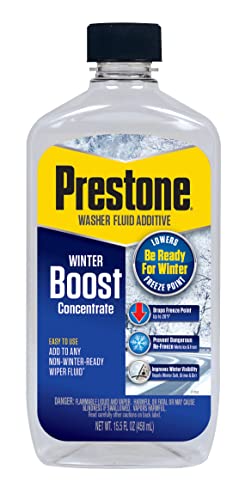
If your reservoir is already full of summer fluid when the first cold snap arrives, you do not have to drain it. Prestone’s AS240 booster is a blend of ice-melting alcohols designed to be added to any washer fluid, and Prestone says it lowers the freeze point by at least 20 degrees while improving the melting of light ice and frost.
Treat it as a bridge, not a substitute. Twenty degrees of extra protection turns a +32°F summer fluid into one good to about +12°F, which is fine for an early frost but not for midwinter. Switch to a proper winter fluid once the reservoir runs low. The listing here is a 12-pack, which suits a household or fleet with several vehicles.
Best for: Winterizing summer fluid already in the tank before the first freeze.
Pros:
- Lowers freeze point by at least 20 degrees, per Prestone
- Works with any washer fluid
- No need to drain the reservoir
Cons:
- Not enough on its own for deep winter
- Sold here as a 12-pack
7. Rain-X Washer Fluid Additive

This additive does a different job from Prestone’s booster. Rather than lowering the freeze point, it adds Rain-X’s water-beading treatment to whatever fluid you already use, so you can keep a cold-rated winter fluid like Prestone AS250 and still get the beading effect.
Rain-X says it helps prevent sleet, snow, ice, bugs and road spray from sticking to the glass and improves cleaning. A 16.9-ounce bottle is added to the reservoir with your existing fluid.
It is not a de-icer, so do not rely on it for freeze protection.
Best for: Adding water beading to a winter fluid that lacks it.
Pros:
- Adds water beading to any fluid
- Helps stop sleet and ice sticking to the glass
- Inexpensive
Cons:
- Provides no freeze protection
- Effect wears off between refills
Things To Keep In Mind Before You Buy
Check the Temperature on the Label
Every washer fluid carries a rating, from about +32°F for summer bug wash down to -34°F for the strongest winter fluids. Pick one rated well below the coldest morning you expect, because the fluid also has to work on glass that is colder still at highway speed.
Don’t Use Water or Tablets in Winter
Washer tablets, many concentrates and plain water have little or no freeze protection. They are fine in summer, but in winter they can freeze in the reservoir, lines and nozzles, and expanding ice can crack the reservoir. If your washers have already stopped working, the fluid may have frozen.
Washer Fluid Is Poisonous
Most winter washer fluids get their freeze protection from methanol. According to Poison Control, fluid poured directly into the washer tank typically contains 30 to 50% methanol, products labeled “concentrate” can contain as much as 90 to 100%, and if swallowed, methanol can cause blindness and death. Symptoms can be delayed for hours. Keep it in its original container, never in a drink bottle, and store it out of reach of children and pets.
Check What Your State Allows
California, Texas and some other states restrict the VOC content of washer fluid, which is why some popular fluids cannot be sold or shipped there. If you live in one of those states, choose a fluid labeled as compliant, such as Clean Revolution.
Winners And Losers
Prestone AS250 De-Icer wins for cold climates with its -34°F rating and anti-refreeze formula. Rain-X Extreme Temperature De-Icer is the alternative from the other big brand, and Rain-X 2-in-1 All Season is the best year-round fluid for moderate winters, with water beading built in.
Clean Revolution is the choice in low-VOC states, and PEAK is the budget fluid for mild winters. Prestone’s AS240 booster is a quick fix for summer fluid already in the tank.
The Rain-X additive is the weakest pick for winter on its own, because it adds no freeze protection, but it is the easiest way to get water beading with a de-icer of your choice.
To Sum Up
Check the rating on the jug, choose one well below your coldest mornings, and switch before the first freeze rather than after the washers stop working. Store it safely, because the methanol that keeps it from freezing is toxic.
Fluid is only half of a clear windshield. Our guide to the best windshield wiper blades covers winter blades that do not clog with ice, and our winter car emergency kit guide covers the rest of the cold-weather list.
Why Isn’t My Washer Fluid Spraying?
Even the right fluid cannot help if it never reaches the glass. If the pump hums but nothing sprays, the fluid may have frozen in the lines or a hose may have come off; if there is no sound at all, check the fuse and the pump. Our guide to washer fluid not spraying walks through each cause, how to thaw frozen lines safely and what the common repairs cost.
Frequently Asked Questions
What temperature washer fluid do I need for winter?
Choose a fluid rated well below the coldest temperatures you expect. In most northern states that means a -20°F to -34°F winter fluid; the colder the region, the lower the rating should be, because the fluid also has to work on glass chilled by wind at speed.
Can I mix winter washer fluid with summer fluid?
Yes, but mixing dilutes the freeze protection. If the reservoir is full of summer fluid, either run it low before refilling or add a de-icer booster such as Prestone AS240, which Prestone says lowers the freeze point by at least 20 degrees.
Can I use water or washer tablets in winter?
Not in freezing weather. Plain water and fluid made from tablets have little or no freeze protection, so they can freeze in the reservoir, lines and nozzles, and the expanding ice can crack the reservoir. Use a fluid rated for the temperatures you drive in.
What do I do if my washer fluid is frozen?
Park the car somewhere warm, such as a heated garage, until it thaws, then top up with a cold-rated winter fluid. Don’t keep running the pump against frozen lines, which can burn it out. Our guide to washer fluid not spraying covers the other causes if it still won’t spray once thawed.
Is windshield washer fluid toxic?
Yes. Most winter washer fluids contain methanol, which Poison Control says can cause blindness and death if swallowed, with symptoms that can be delayed for hours. Keep it in its original container, out of reach of children and pets, and call Poison Control at 1-800-222-1222 if someone swallows any.
Is all-season washer fluid good enough for winter?
In moderate climates, usually. All-season fluids like Rain-X 2-in-1 are rated to around -25°F. In the coldest regions, a dedicated winter de-icer rated to -30°F or below gives more margin.
