


The engine idles rough and the check engine light shows a lean code. There is a faint whistle from under the hood that was not there last month. Or oil has started weeping from a valve cover gasket that was replaced not long ago, and you are topping up oil more often than you used to. Those problems look unrelated, but they can all come from one small, cheap part: the PCV valve.
This guide covers the seven most common symptoms of a bad PCV valve, why it produces completely different symptoms depending on whether it sticks open or clogs shut, how to test it with nothing more than the oil filler cap, and what replacement typically costs on older engines and on newer ones where the valve is built into the valve cover.
The short version: on many older engines the PCV valve is a $5 to $30 part you can change in ten minutes. On a lot of newer engines it is part of the valve cover, and the fix becomes a cover replacement. Either way, ignoring it tends to cost far more than the part, in oil leaks, burned oil and lean-running damage.
| Symptom | What You Notice | How Urgent |
|---|---|---|
| Check engine light, lean codes | P0171 or P0174, sometimes a misfire code | Fix soon |
| Rough or unstable idle | Shaky, high or hunting idle, occasional stalling | Fix soon |
| Whistling or hissing | High-pitched whistle or moan at idle | Fix soon |
| Burning more oil | Topping up more often, blue-grey exhaust smoke | Fix soon |
| New oil leaks | Seals and gaskets weeping, oil on the engine | Fix soon |
| Oil in the air intake | Oily air filter box or intake hose | Book it in |
| Sludge or milky deposits | Creamy residue under the oil cap | Book it in |
Stop driving and get it checked if the check engine light is flashing, if oil is dripping onto the exhaust and you can smell or see burning oil, or if the dipstick has been pushed up out of its tube. A flashing light means an active misfire that can overheat the catalytic converter, and a dipstick forced out means crankcase pressure high enough to blow a seal.
What The PCV Valve Does
Every engine leaks a little combustion gas past the piston rings and into the crankcase. This “blow-by” is full of unburned fuel, water vapor and acids. If it stays in the crankcase, it contaminates the oil and builds pressure. If it is simply vented, it pollutes the air. Positive crankcase ventilation (PCV) solves both problems by drawing those gases into the intake manifold so the engine burns them. It is required by law: federal emissions rules state that no crankcase emissions shall be discharged into the ambient atmosphere from modern light-duty vehicles.
The PCV valve meters that flow. On a traditional design it is a small spring-loaded plunger in a plastic or metal housing, usually pushed into a rubber grommet in the valve cover, with a hose running to the intake. At idle, high manifold vacuum pulls the plunger almost closed so only a small flow passes. At part throttle, it opens further to clear more blow-by. Many newer engines replace the separate valve with a diaphragm and oil separator molded into the valve cover, which does the same job but cannot be replaced on its own.
That gives two opposite failures:
- Stuck open, or a torn diaphragm — too much air reaches the intake without being measured, which behaves like a vacuum leak. You get lean codes, a rough idle and whistling, and the engine can start pulling oil mist into the intake and burning it.
- Clogged or stuck closed — blow-by has nowhere to go, so crankcase pressure rises. Oil is forced out past seals and gaskets, pushed back up into the air intake, and the oil degrades faster because moisture and fuel are not cleared out.
Engines that do a lot of short trips are hardest on PCV systems. The oil never gets hot enough to boil off the water in the blow-by, and that sludge gums the valve and hoses. In very cold climates, the moisture can also freeze in the hoses and block the system completely.
1. Check Engine Light With Lean Codes
When the valve sticks open, or a valve-cover diaphragm tears, it lets in air that the mass air flow sensor never measured. The engine computer sees the oxygen sensors reading lean and adds fuel to compensate. Once it runs out of correction, it sets P0171 (system too lean, bank 1) and on V engines often P0174 for bank 2 as well. A lean mixture can also cause misfires, so a random misfire code like P0300 sometimes appears alongside.
The signature of a PCV leak, as with any vacuum leak, is fuel trims that are high at idle and come back toward normal at higher engine speed, because the unmetered air becomes a smaller share of the total as airflow rises. That pattern is worth checking on a scan tool before you start replacing sensors.
This is a documented failure, not a theory. GM’s preliminary information bulletin PIP5197J for the 1.4L turbo in the Chevrolet Cruze, Sonic, Trax and Buick Encore covers oil consumption, blue smoke from the exhaust, a whistle noise and codes P0171, P0300 or P0299. On that engine the PCV orifice is part of the camshaft cover, and the bulletin’s fix when it leaks oil or vacuum is to replace the whole cover.
2. Rough, High Or Unstable Idle
Idle is where a PCV fault is most noticeable, because manifold vacuum is highest and airflow is lowest, so a small unmetered leak has the biggest effect. A valve stuck open can make the idle shaky, raise it a few hundred rpm, or make it hunt up and down as the computer chases the mixture. Some cars stall when coming to a stop.
A clogged valve usually does the opposite to idle quality, which is very little, so a rough idle on its own points more toward a stuck-open valve, a split PCV hose, or a cracked grommet. Our guide to vacuum leak symptoms and how to find one covers the other leak points that produce the same idle and are worth checking at the same time.
3. Whistling, Hissing Or Moaning Noises
Air rushing through a small gap at high vacuum whistles. A torn PCV diaphragm, a split hose or a hardened grommet can all produce a high-pitched whistle, a hiss or a low moan at idle that changes or disappears as you open the throttle. On integrated valve-cover designs, a whistle that stops when you briefly cover the breather port with a finger is a well-known test for a failed diaphragm.
Not every engine whistle is the PCV system, of course. Our guide to why your car is whistling covers the other sources, from intake leaks to belts and turbochargers.
4. Burning More Oil, Or Blue-Grey Smoke
A PCV valve stuck open, or a failed oil separator, lets the intake pull oil mist straight out of the crankcase. The engine burns it, so oil consumption rises and you may see blue-grey smoke, especially at idle or on startup. GM’s bulletin above uses a clear threshold for excessive consumption: one quart or more of oil within 2,000 miles, not caused by leaks.
A clogged valve can increase oil use too, by pushing oil past seals and into the intake through the breather. Either way, rule out the PCV system before assuming worn piston rings or valve seals, because it costs a fraction as much to fix. Our guides to blue smoke from the exhaust and worn valve seals or piston rings cover the more expensive causes.
5. Oil Leaks From Seals And Gaskets
When a clogged PCV valve traps blow-by in the crankcase, the pressure has to go somewhere. It finds the weakest seal: valve cover gaskets, the oil pan gasket, camshaft and crankshaft seals and, in the worst cases, the rear main seal. Oil leaks that appear at several places at once, or that come back soon after a gasket is replaced, are a strong pointer to crankcase pressure rather than a bad gasket.
Fix the PCV system first, then the leaks. Replacing gaskets on a pressurized engine means doing the job twice. Our guides to head gasket or valve cover gasket leaks, rear main seal leak symptoms and oil leaking from the bottom of the engine help pin down where the oil is escaping. If oil is reaching the exhaust manifold, that is also where a burning oil smell comes from.
6. Oil In The Air Filter Box Or Intake
Most PCV systems have a second, fresh-air side: a breather hose that runs from the valve cover to the air intake, so filtered air can flow into the crankcase to replace the gases being drawn out. When the PCV valve clogs, pressure reverses that flow, and oil vapor is pushed back up the breather into the air filter housing. An oil-soaked patch on the air filter, or oil pooling in the intake hose, is the giveaway.
Oil in the intake is not just messy. It coats the mass air flow sensor and throttle body, which causes its own drivability problems, and on turbocharged engines it collects in the intercooler. A small film of oil in the intake of a high-mileage engine can be normal, so look for a change, not perfection.
7. Sludge Or Milky Deposits Under The Oil Cap
Blow-by contains a surprising amount of water. A working PCV system clears it out while it is still vapor. When the flow is restricted, the water condenses in the engine and mixes with the oil, leaving a creamy, mayonnaise-like residue on the underside of the oil filler cap and inside the valve cover. Over time it turns into sludge that blocks oil passages.
A little milky residue on the cap after a cold winter of short trips is common and not a sign of a problem on its own. Heavy, persistent deposits are worth investigating. If you also see coolant loss, white exhaust smoke or overheating, check for a head gasket leak before blaming the PCV system, because the residue can look the same. Our guide to bad head gasket symptoms covers how to tell them apart.
How To Test A PCV Valve
Most of these tests take a minute or two and need no tools.
- The shake test. On engines with a removable valve, pull it out of its grommet with the engine off and shake it. A good valve rattles. No rattle means the plunger is stuck and the valve needs replacing. A rattle does not prove the valve is perfect, but no rattle proves it is not.
- The vacuum check. With the engine idling, pull the valve out of the grommet, still attached to its hose, and put your thumb over the end. You should feel strong suction, and the idle should change. No suction means a blocked valve or hose.
- The oil cap test. With the engine idling, loosen the oil filler cap. A slight suction holding it down is normal. Oil mist or air puffing out means crankcase pressure, so the system is blocked or blow-by is excessive. A very strong suction that makes the idle stumble points to a valve stuck open or a torn diaphragm.
- The glove test. Stretch a rubber glove over the oil filler opening with the engine idling. It should be drawn in slightly or stay limp. If it inflates, the crankcase is pressurized.
- Inspect the hoses and grommet. Old PCV hoses go hard, crack and collapse, especially at bends near hot parts. Squeeze them along their length. A cracked grommet leaks just like a stuck valve.
- Read the fuel trims. With a scan tool, high positive long-term fuel trim at idle that falls toward zero at 2,500 rpm points to a vacuum leak, PCV included. A shop smoke test will find exactly where it is.
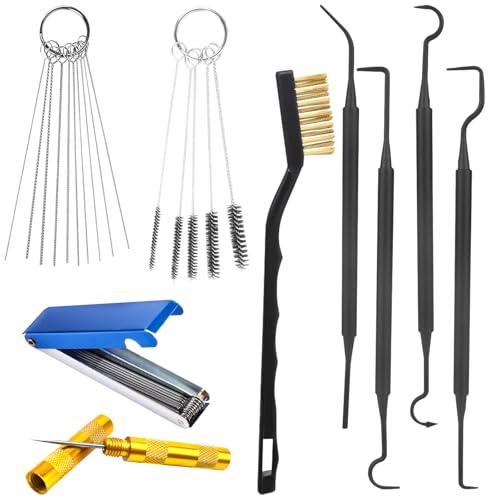
Keep one thing in mind. A PCV system is sized for the blow-by of a healthy engine. If the rings are badly worn, a perfectly good valve can be overwhelmed and the engine will still show crankcase pressure. If a new valve does not fix the pressure, a compression or leak-down test is the next step. A can of carburetor or intake cleaner is useful for clearing gum from PCV hoses and the intake port while the valve is out, but replacing a clogged valve is cheaper and more reliable than cleaning it.




PCV Valve Replacement Cost
Typical costs, as a guide rather than a quote:
| Job | Typical Parts | Typical Total Installed |
|---|---|---|
| Separate PCV valve, easy access | $5 to $30 | $50 to $150 |
| PCV valve plus hoses and grommet | $20 to $80 | $100 to $250 |
| Valve buried under the intake manifold | $10 to $40 | $200 to $450 |
| Valve cover with integrated PCV and separator | $100 to $400 | $250 to $800 |
On many older four-cylinder engines, the PCV valve pulls straight out of the valve cover and is the cheapest repair on the car. On some V6 and V8 engines it sits under the intake manifold, which is where most of the labor goes. On many modern engines from GM, Volkswagen, BMW and others, the valve is part of the valve cover, so the whole cover is replaced, and the gasket along with it. If the problem has been going on for a while, budget for an oil change too, since the oil will have been contaminated.
Can You Keep Driving With A Bad PCV Valve?
In the short term, usually yes. A bad PCV valve rarely leaves you stranded, and many cars run with one for months. But it is not a fault to ignore, because the damage it causes builds up slowly and costs far more than the valve:
- A clogged valve keeps pressurizing the crankcase, so seals and gaskets keep failing and the oil keeps breaking down. Left long enough, sludge can starve parts of the engine of oil.
- A valve stuck open keeps the engine running lean and burning oil. Long-term lean running and repeated misfires are hard on the catalytic converter, and burned oil fouls spark plugs and oxygen sensors.
If the check engine light is flashing, the dipstick has been pushed out, or oil is dripping onto hot exhaust parts, stop and get it fixed before driving further. Otherwise, aim to fix it within a few weeks, and check the oil level often until you do.
The PCV valve is not the only emissions valve that causes rough running and lean or rich codes. If yours checks out fine, our guide to bad EGR valve symptoms covers the other common culprit.
Bad PCV Valve Questions Answered
How do I know if my PCV valve is bad?
On engines with a removable valve, pull it out and shake it. A good valve rattles, and a silent one is stuck. With the engine idling, loosening the oil filler cap should show a slight suction. Air or oil mist puffing out means the system is blocked, and strong suction that makes the idle stumble means the valve is stuck open or a diaphragm is torn.
Can a bad PCV valve cause a check engine light?
Yes. A valve stuck open or a torn diaphragm lets in unmetered air, which commonly sets lean codes P0171 and P0174 and sometimes misfire codes such as P0300. A clogged valve is less likely to set a code directly, but the oil it pushes into the intake can cause other faults over time.
Can a bad PCV valve cause oil leaks?
Yes. A clogged valve traps blow-by gases in the crankcase, and the pressure forces oil out past the valve cover gaskets, oil pan gasket and crankshaft and camshaft seals. Leaks that appear in several places at once, or return soon after a gasket is replaced, are a strong sign of crankcase pressure.
Can a bad PCV valve make an engine burn oil?
Yes. A valve stuck open, or a failed oil separator, lets the intake pull oil mist out of the crankcase and burn it, which raises oil consumption and can cause blue-grey smoke. Check the PCV system before assuming worn piston rings or valve seals.
How often should a PCV valve be replaced?
Check your owner’s manual or maintenance schedule. Many older vehicles listed it as a regular inspection item, while many newer engines with an integrated valve cover design have no fixed interval and are replaced only when they fail. Engines that do a lot of short trips clog their PCV systems faster.
Is it safe to drive with a bad PCV valve?
Usually for a short time, as it rarely leaves you stranded. But a clogged valve keeps damaging seals and the oil, and a valve stuck open keeps the engine running lean and burning oil. Fix it within a few weeks, and stop driving if the check engine light flashes or oil is dripping onto the exhaust.
Wrapping It Up
A bad PCV valve shows up in two ways. Stuck open, it causes lean codes, a rough idle, whistling and burned oil. Clogged, it pressurises the crankcase and pushes oil out of seals and into the intake. The oil cap and glove tests tell you which in a couple of minutes, and on most engines the fix is cheap. Do it before replacing gaskets or chasing sensors, because a bad PCV valve will undo both.
As an Amazon Associate we earn from qualifying purchases.
