





Keeping your car’s paint looking showroom-fresh isn’t just about aesthetics – it’s about protecting one of your biggest investments. Paint sealants have become essential for car owners who want long-lasting protection that goes beyond what traditional wax can offer.
These synthetic formulations create a durable barrier against UV rays, road grime, and environmental contaminants while delivering a deep, glossy finish.
The difference between a good sealant and a great one shows up after a few months of real-world use, so durability matters as much as the initial shine.
The top-rated options that consistently perform well combine ease of application with genuine durability, giving you professional-level results without the professional price tag.
This roundup focuses on products that deliver on their promises, helping you cut through the marketing hype to find the sealant that actually works for your specific needs and budget.
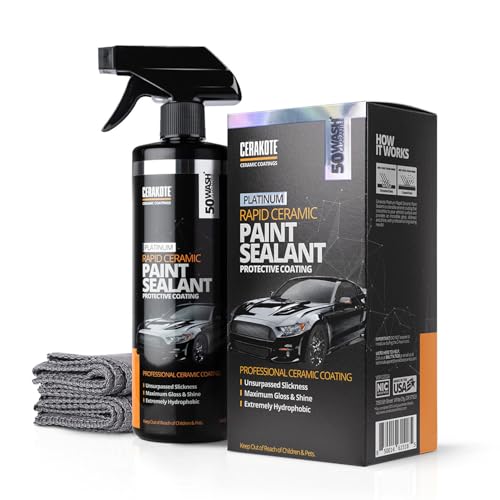
This 14-ounce spray bottle is one of the stronger ceramic spray sealants available. The Cerakote Platinum uses genuine inorganic ceramic technology that creates an incredibly slick, hydrophobic surface with what they claim is a 50-wash rating.
Its selling point is a mirror-like gloss, unusually high for a spray sealant.
The application process couldn’t be simpler, which is rare for products that deliver this level of performance. After washing and drying your car normally, you just spray a light, even coat directly onto each panel and buff it out with a microfiber towel.
The maker says it can be applied in direct sunlight and buffs off without streaks or residue.
It is built for real-world conditions. The hydrophobic finish helps road spray and dirt slide off in the rain.
The hydrophobic properties are genuinely impressive – water beads up and rolls off like the surface is made of glass. It is designed to survive repeated washes.
The durability aspect is where this product really shines compared to typical spray sealants. Most quick detailers wash off after a few weeks, but this actually lasts for months.
Water beading is the easiest way to judge when it needs reapplying. The gloss has maintained about 90% of its original intensity, which is remarkable for a product this easy to apply.
This works best for car enthusiasts who want professional-level results without the complexity of traditional ceramic coatings. If you’re someone who details your car regularly and wants maximum gloss with genuine durability, this is worth the investment.
The price point puts it in the premium category, but the performance justifies the cost when you consider how long it lasts. It suits anyone who wants the convenience of a spray without giving up protection.
| Pros | Cons |
|---|---|
|
|
This 16-ounce liquid sealant is Meguiar’s professional-grade approach to paint protection. The synthetic polymer formulation creates a noticeably deeper, darker finish that really makes your paint color pop.
It is designed to visually hide fine scratches and swirl marks.
The application process is smooth and predictable, which matters when you’re working on an entire vehicle. It is designed to go on easily and wipe off without dragging or streaking.
The hydrophobic polymer technology creates impressive water beading that lasts significantly longer than traditional wax. Meguiar’s markets it for long-lasting protection.
Its strength is a deep, reflective finish. The synthetic polymers bond well to clear coat and provide genuine protection against UV rays and environmental contaminants.
It is formulated to hold its gloss over time. Even after six months of regular driving, the finish still has that deep, wet look that makes the paint appear almost liquid.
The durability is where this product really proves its worth as a professional-grade sealant. While it requires more effort than spray-on products, the protection lasts considerably longer.
Liquid sealants generally last longer than sprays, which makes the extra application work worthwhile, though real durability depends on climate, washing and storage. The UV protection is particularly noticeable on darker colors that typically fade quickly in direct sunlight.
This is perfect for car owners who want professional results and don’t mind spending a bit more time on application. If you’re someone who details your car twice a year and wants maximum protection between applications, this delivers excellent value.
The 16-ounce bottle provides enough product for multiple full-car applications, making it cost-effective for regular users. It suits anyone who puts long-term protection ahead of convenience.
| Pros | Cons |
|---|---|
|
|
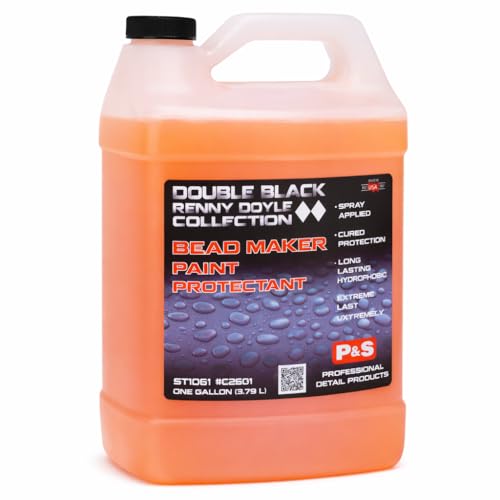
This gallon-sized container of Bead Maker represents incredible value for anyone who maintains multiple vehicles or wants to keep a large supply on hand.
What sets this product apart is its versatility: it is listed for paint, rubber, plastic, metal and glass. The spray-and-wipe application works on both wet and dry surfaces, which is incredibly convenient during regular maintenance.
The formula is built around strong water beading. Water literally slides off treated surfaces, taking dirt and grime with it.
A slick, hydrophobic surface stays cleaner between washes and makes each wash easier. The built-in UV filters and stabilizers provide genuine protection against sun damage, which is crucial for preserving paint color and preventing oxidation.
Bead Maker enhances gloss while providing protection. The finish isn’t just shiny – it amplifies the color depth and creates that mirror-like appearance that makes your vehicle look showroom-fresh.
It is suitable for daily drivers as well as boats and RVs.
The ease of application can’t be overstated. You literally spray it on, buff with a microfiber towel, and you’re done. It is forgiving to apply in a range of conditions. The product doesn’t streak or leave residue, even when applied quickly.
This makes it perfect for regular maintenance between more intensive detailing sessions.
This works best for people who want professional results without professional complexity. If you maintain multiple vehicles or want a product that works on everything from your car to your boat, this is an excellent choice.
The gallon size makes it incredibly cost-effective for regular users, and the versatility means you only need one product for all your protection needs. It suits anyone who values convenience and wants one product for several surfaces.
| Pros | Cons |
|---|---|
|
|
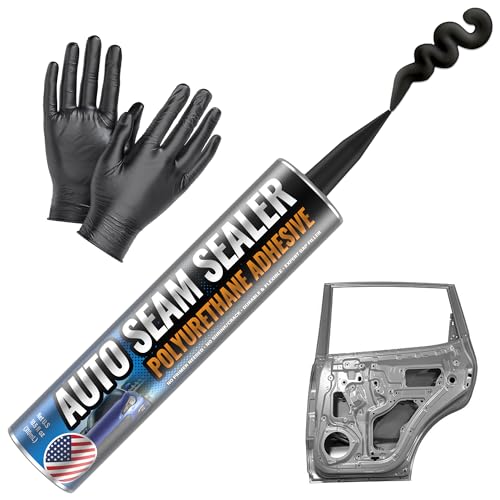
This polyurethane-based seam sealer serves a completely different purpose than traditional paint sealants, focusing on sealing gaps and joints in automotive bodywork.
The black formulation bonds strongly to primed, painted, or bare metal surfaces and cures quickly – it’s ready for paint in just 30 minutes. This is a seam sealer rather than a paint sealant, and its maker says it adheres without surface preparation, which saves time during repairs.
The all-weather performance is where this product really proves its worth. It is designed to stay flexible through temperature changes.
Unlike some sealers that crack or shrink over time, this polyurethane formula stays flexible and maintains its seal integrity. The fact that it doesn’t require sanding after curing makes it incredibly convenient for both professional and DIY applications.
The application process is straightforward with any standard urethane caulk gun. The consistency is perfect – thick enough to fill gaps effectively but smooth enough to apply evenly.
It suits body panel gaps and seam repairs. The black color makes it ideal for applications where the sealer might be visible, as it blends well with most automotive finishes.
What sets this apart from other seam sealers is its versatility across different vehicle types. It is listed for cars, trucks, RVs and boats. The automotive-grade formulation handles the vibration and movement that vehicles experience without failing.
The paintable surface means you can achieve a seamless repair that’s virtually invisible once painted.
This is essential for anyone doing automotive bodywork or restoration projects. If you’re dealing with panel gaps, seam repairs, or weatherproofing issues, this provides professional-grade results. The included gloves and application tip make it ready to use right out of the package.
It suits DIY and professional bodywork that needs seam sealing.
| Pros | Cons |
|---|---|
|
|

This 16-ounce bottle contains Nu Finish’s latest formulation with 3-in-1 ceramic technology that promises to repair, seal, and repel in one application. Its headline claim is year-long protection, which is ambitious for any sealant.
Whether it reaches “once a year” depends heavily on driving conditions and how the car is washed.
The repair capabilities are genuinely impressive for a liquid polish. It is designed to help hide fine swirls, scuffs and light scratches while leaving a glossy, wet-look finish.
The ceramic technology forms a protective barrier that provides excellent water beading and makes future cleaning much easier. The maker says it needs no rubbing or buffing and can be applied in direct sunlight.
The application process is remarkably simple compared to traditional waxes and sealants. You apply it like a liquid, let it haze slightly, then wipe it off. The product doesn’t require the perfect conditions that many sealants demand, which makes it incredibly convenient for regular maintenance.
It is easy to apply.
Sealants of this type generally outlast traditional waxes, though a full year is optimistic for most daily drivers. Plan to check water beading every few months and reapply when it fades.
The ceramic technology does provide better longevity than conventional products, and the water beading remains impressive for months after application.
This works best for car owners who want maximum convenience without sacrificing protection quality. If you’re someone who prefers simple maintenance routines and wants a product that delivers both polishing and sealing in one step, this is an excellent choice.
The ability to apply it in direct sunlight makes it perfect for people who don’t have garage space or ideal working conditions. It suits anyone who wants effective protection with minimal effort.
| Pros | Cons |
|---|---|
|
|
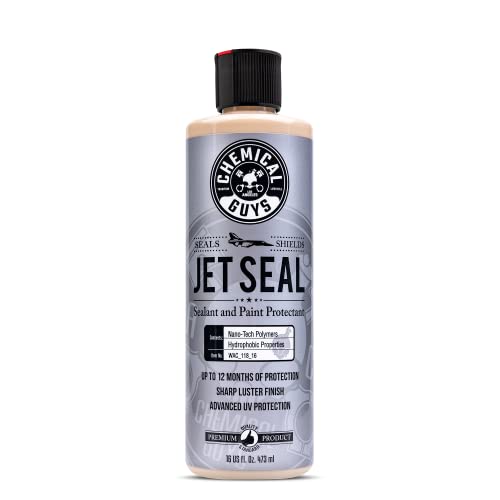
This 16-ounce bottle of JetSeal represents Chemical Guys’ aerospace-grade approach to paint protection, and the technology behind it is genuinely impressive.
Originally developed for the aerospace industry, this fully synthetic sealant uses nano-tech polymers that bond directly to paint surfaces for exceptional durability. What sets this apart from traditional waxes is its ability to withstand extreme temperature variations without losing effectiveness.
The protection characteristics are where JetSeal really shines. It is marketed for harsh conditions, from desert heat to winter road salt. The sealant creates a strong shield against water spots, contamination, and UV rays.
The innovative blocker technology genuinely helps prevent paint fading and discoloration, which is particularly noticeable on darker colors that typically show sun damage quickly.
The application process requires more effort than spray sealants but delivers significantly better results. You apply it like a traditional wax, let it haze, then buff it off. The synthetic polymers create an incredibly smooth, glassy finish that enhances the depth and clarity of your paint.
It is known for a deep, wet-look gloss.
Durability is its main selling point. While traditional waxes last maybe 2-3 months, JetSeal consistently provides 6-8 months of solid protection. The water beading remains impressive throughout its lifespan, and the gloss retention is excellent.
JetSeal is designed to last a full season of regular driving.
This is perfect for serious car enthusiasts who want maximum protection and don’t mind investing time in proper application. If you’re someone who details your car seasonally and wants the best possible protection between applications, this delivers exceptional value.
The aerospace-grade technology provides peace of mind for expensive paint finishes, and the durability makes the extra effort worthwhile. It suits anyone who puts long-term protection ahead of convenience.
| Pros | Cons |
|---|---|
|
|

This 8-ounce bottle of Nexgen Ceramic Spray uses high-grade Silicon Dioxide (SiO2) to create what they claim is professional-grade protection with the fastest application time on the market. It is designed for ease of use.
The ceramic coating creates a genuine protective barrier that significantly reduces the ability of contaminants to damage your clear coat and paint.
The application process is incredibly simple – spray it on, wipe evenly with a microfiber towel, then buff for shine. Its main appeal is how quickly an entire vehicle can be done. As a spray, it can cover even a full-size truck quickly.
The product works on all external surfaces including metal, paint, glass, plastic, rubber, and even leather, making it truly versatile.
The protective capabilities are genuinely impressive for a spray application. The hydrophobic surface makes it easier to wash off dirt, mud, salt, pollen, bird droppings and road grime.
The glass-like finish repels water and contaminants, which helps reduce staining and etching.
What sets this apart from other ceramic sprays is the coverage you get from the bottle. An 8-ounce container provides enough product to coat a mid-size sedan 4-5 times, which makes it incredibly cost-effective.
It is suitable for motorcycles, cars, trucks and boats. The UV protection is particularly noticeable on vehicles that spend time in direct sunlight.
This works best for people who want ceramic protection without the complexity of traditional ceramic coatings. If you’re someone who maintains multiple vehicles or wants professional-grade protection with minimal time investment, this is an excellent choice.
The versatility across different surfaces means you can protect everything from your daily driver to your recreational vehicles with one product. It suits anyone who wants strong protection with little effort.
| Pros | Cons |
|---|---|
|
|
Things To Keep In Mind Before You Buy
• Application method matters more than you think – Some sealants require perfect conditions and multiple steps, while others can be applied in direct sunlight with minimal prep work.
• Durability claims vs. reality often don’t match – Look for products with realistic timeframes rather than “once a year” promises that rarely hold up in harsh climates.
• Surface compatibility affects your options – Make sure the sealant works on all the surfaces you want to protect, including plastic trim, rubber, and glass.
• Curing time impacts your schedule – Some sealants need hours to fully cure, while others can handle rain within minutes of application.
• Budget vs. premium makes sense when you consider frequency – Spending more upfront often means fewer applications per year, which can actually save money and time in the long run.
Winners And Losers
Clear winners emerge in different categories. For overall performance and durability, the Cerakote Platinum takes the top spot with its genuine ceramic technology and exceptional gloss.
The mirror-like finish and months-long protection justify the premium price for serious enthusiasts.
Best Budget Choice goes to P&S Bead Maker – that gallon container provides incredible value, and the versatility across all surfaces makes it perfect for maintaining multiple vehicles.
The spray-and-wipe convenience combined with excellent hydrophobic properties makes this a standout for regular users.
For Maximum Durability, Chemical Guys JetSeal wins with its aerospace-grade technology. Its durability suits people who want to detail seasonally rather than monthly.
Most Convenient definitely goes to Nu Finish Once a Year – the ability to apply in direct sunlight with no buffing required makes this incredibly user-friendly. While the year-long claim is optimistic, the 6-8 months of protection with minimal effort is impressive.
Best Professional Results belongs to Meguiar’s Professional Synthetic Sealant 2.0. The depth and clarity it creates in paint finish is exceptional, and the professional-grade formulation delivers exactly what serious detailers expect.
The Nexgen Ceramic Spray offers the best balance of ceramic technology and ease of use, while the Professional Seam Sealer serves a completely different purpose for bodywork applications.
To Sum Up
Choosing the right paint sealant really depends on your priorities and maintenance routine. If you want the absolute best protection and gloss, invest in the Cerakote Platinum – it’s worth every penny for the results it delivers.
For regular maintenance and multiple vehicles, P&S Bead Maker provides unbeatable value and versatility.
Serious enthusiasts who detail seasonally should consider Chemical Guys JetSeal for its exceptional durability, while casual users will love the convenience of Nu Finish Once a Year.
The Meguiar’s Professional Sealant 2.0 is perfect for those who want professional-grade results and don’t mind investing time in proper application.
If you’re new to paint sealants, start with P&S Bead Maker: it’s forgiving, versatile and delivers good results. Once you experience the benefits of proper paint protection, you can always upgrade to premium options like Cerakote or JetSeal based on your specific needs.
The key is finding a product you’ll actually use consistently, because the best sealant is the one that’s actually on your car protecting it.
Buying Guide
When you’re shopping for paint sealants, think of it like choosing the right tool for your specific situation. Start by assessing how much time you want to spend on car care and how often you’re willing to reapply.
If you’re someone who details your car every weekend, you can handle more complex applications that deliver better results. But if you’re more of a “wash it when it’s dirty” person, you need something that works with minimal effort and still provides decent protection.
The key difference you’ll notice between budget and premium sealants isn’t just the price – it’s the technology and durability.
Cheaper products often use basic polymers that wash off relatively quickly, while premium options use advanced ceramic or synthetic technologies that bond more permanently to your paint.
Spending more upfront usually means fewer applications per year, which can save time and money in the long run.
The real sweet spot is finding a product that matches your maintenance routine – there’s no point buying a year-long sealant if you enjoy detailing monthly, and there’s no sense getting a basic product if you want maximum protection.
Consider your environment too, because harsh conditions demand better protection. If you live in an area with intense sun, road salt, or industrial pollution, investing in a high-quality sealant with strong UV protection and chemical resistance makes sense.
On the other hand, if your car lives in a garage and sees mostly highway miles, a mid-range product will probably exceed your needs.
The best approach is to match the product’s capabilities to your actual requirements – don’t overpay for features you won’t benefit from, but don’t skimp on protection if your car faces tough conditions daily.
Sealant Or Film — Which Protects Better?
Paint sealant is the easiest way to add a protective layer in an afternoon, but it isn’t the only option. For longer-term, physical protection against rock chips and road debris, check out our picks for the best paint protection film for cars.
How often should I reapply paint sealant to maintain protection?
This really depends on the product and your driving conditions. Spray sealants typically need reapplying every few months, while liquid sealants usually last longer. Premium ceramic-based products like the Cerakote can go even longer. Water beading is the best indicator: when water stops beading up and starts sheeting off, it’s time to reapply. Cars that see daily highway driving, harsh weather, or frequent washing will need more frequent applications than garage-kept weekend drivers.
Can I apply paint sealant over existing wax or should I strip it first?
You’ll get much better results if you strip the old wax first. Sealants need to bond directly to your paint or clear coat, and wax creates a barrier that prevents proper adhesion. Use a mild paint cleaner or panel prep spray to remove old wax before applying sealant. The good news is that once you switch to sealants, you can typically apply new coats over old ones as long as the surface is clean. This makes maintenance much easier than the constant strip-and-reapply cycle that wax requires.
What’s the difference between ceramic sprays and traditional liquid sealants?
Ceramic sprays use Silicon Dioxide (SiO2) technology that creates a harder, more durable protective layer, while traditional sealants use synthetic polymers. Ceramic sprays generally provide stronger water beading and longer-lasting protection, but they usually cost more. The application is often easier with ceramic sprays – most are spray-and-wipe products. However, liquid sealants can sometimes provide deeper gloss and are often more cost-effective for covering large areas or multiple vehicles.
Will paint sealant damage my car’s clear coat or paint?
Quality paint sealants are specifically designed to protect your clear coat and paint, not damage them. Consumer paint sealants are designed to be safe on modern clear coats when used as directed. The key is using products from reputable manufacturers and following the application instructions. Avoid applying sealants to hot surfaces or in direct sunlight unless the product specifically states it’s safe to do so. Always test on a small, inconspicuous area first if you’re concerned about compatibility with your specific paint system.
Can I use the same sealant on my car’s plastic trim and rubber seals?
This depends on the specific product – some sealants are safe for all surfaces while others are paint-only. Products like P&S Bead Maker and Nexgen Ceramic Spray are specifically formulated to work on multiple surfaces including plastic, rubber, and metal. However, traditional liquid sealants are often designed primarily for paint and may not be suitable for trim pieces. Always check the product specifications, and when in doubt, use a dedicated trim protectant for plastic and rubber components to avoid any potential issues.
